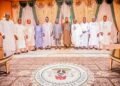








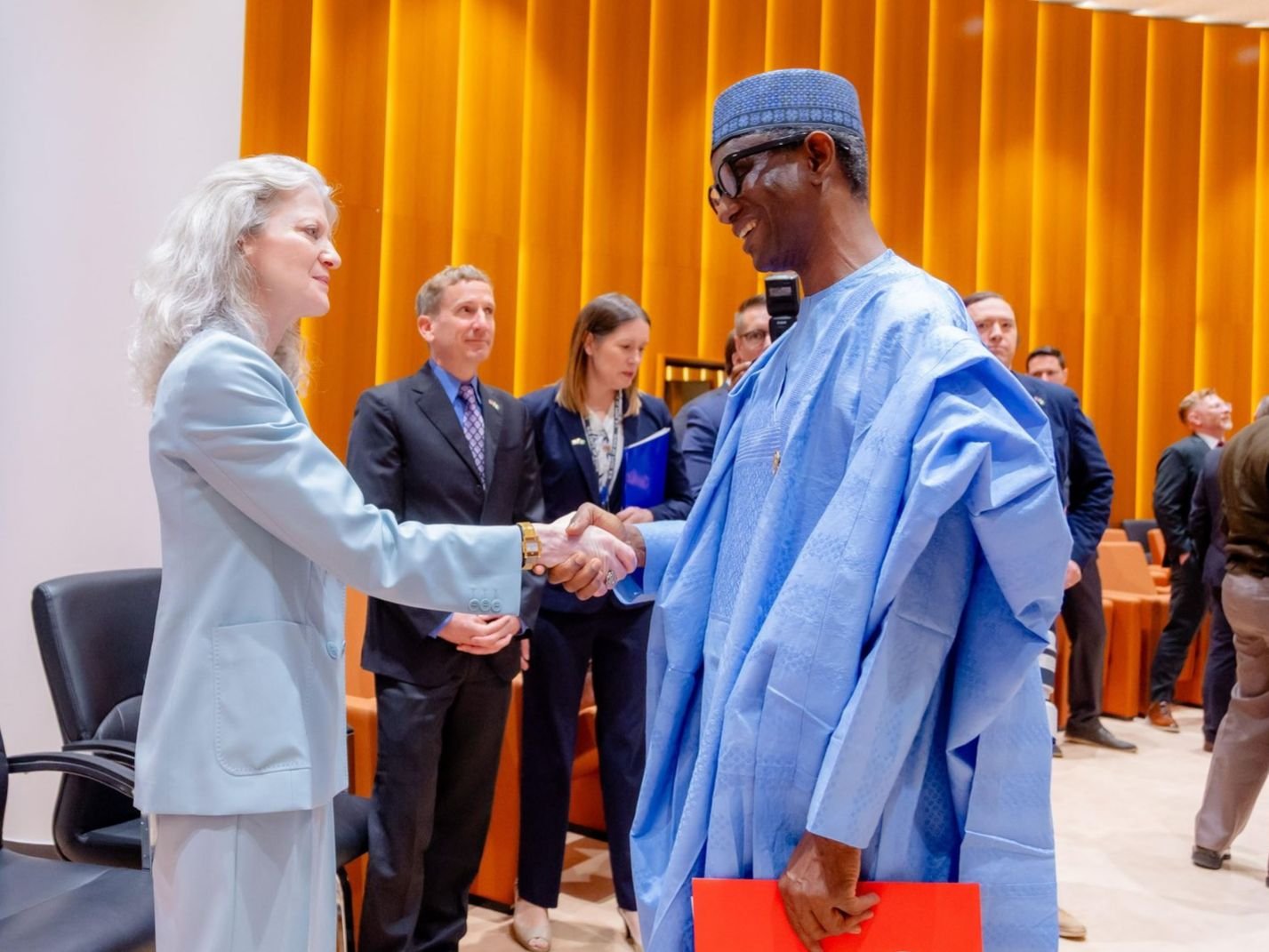
The United States and Nigeria on Thursday sought to steady and recalibrate their security and diplomatic relationship, holding the first session of the US-Nigeria Joint Working Group established to address the US’ designation of Nigeria as a Country of Particular Concern (CPC) under the International Religious Freedom Act.
The meeting, held in Abuja on January 22, brought together senior officials from both governments in what was described as a deliberate effort to “work in close partnership” to reduce violence against vulnerable groups, particularly Christian communities, while ensuring that all Nigerians are able to practise their faith without fear.
In a joint statement issued at the end of the session, both sides said the Working Group would focus on curbing attacks by “terrorists, separatists, bandits, and criminal militias” and creating a more secure and inclusive environment across the country.
Nigeria’s delegation was led by the National Security Adviser (NSA), Nuhu Ribadu, who coordinated representatives from 10 ministries and agencies, while the US delegation was headed by Under Secretary of State for Political Affairs, Allison Hooker, alongside officials from eight federal agencies.
The discussions, according to the statement, covered a broad range of security and governance challenges where closer cooperation could “improve religious freedom and bolster security across the country.” Both governments also took time to underline the historical depth of the bilateral relationship, noting that it is “grounded on shared values of pluralism, respect for rule of law and sovereignty.”
The US side welcomed what it described as Nigeria’s “realignment of resources to address insecurity,” with particular attention to the North Central states, where violence against civilians has drawn sustained international concern. The two governments reiterated what they called a “strong and unflinching commitment” to religious freedom and agreed on the need for “active, sustained measures” to protect freedom of religion, expression and peaceful assembly, in line with Nigeria’s constitution.
In a statement, Mal. Ribadu noted that:
“These sustained engagements reflect a mature, trust-based relationship focused on protecting civilians, promoting religious freedom, and addressing shared security challenges.
“Nigeria approaches this platform as a practical, results-oriented partnership. Since late 2025, cooperation with the United States has moved beyond dialogue to tangible outcomes, strengthening coordination, accountability, and our collective capacity to counter violent threats while upholding the protection of civilians.”
Participants at the session also emphasised the protection of civilians and the importance of holding perpetrators of violence accountable, especially in cases involving attacks on vulnerable Christian communities.
On security cooperation, both sides reaffirmed their resolve to deepen counter-terrorism collaboration, including through operational coordination, access to technology, anti-money laundering efforts, counter-terrorism financing measures, and enhanced law-enforcement and investigative capacity.
Notably, the US delegation commended Nigeria for what it called “urgent actions to strengthen security for at-risk Christian communities and Nigerians of all faiths whose safety is put in jeopardy by violence and terrorism.”
The meeting builds on a series of high-level engagements convened by Mal. Ribadu in recent weeks, which officials say have helped maintain diplomatic balance while Nigeria presses its case on security reforms.
Both sides agreed that the next session of the Working Group will be held in the United States on a date to be determined through diplomatic channels.