

















By Martins Okorowu
For most Nigerians, monetary policy can sound distant and technical—something discussed by economists, bankers and policymakers in conference rooms. But its effects are much closer to home.
Why do I say so? It can influence how much a business pays to borrow money, what a young man or woman that saves earns on a deposit, how much the Naira in your pocket can buy, how confidently companies make investment decisions (which in turn results to new businesses and jobs) and, ultimately, how quickly the prices of everyday goods and services rise.
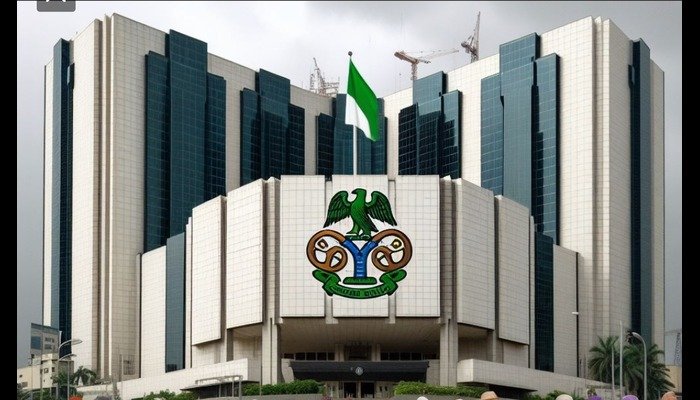
This is why the work of the Central Bank of Nigeria (CBN) matters beyond its regulation of banks and financial markets.
At its simplest, monetary policy refers to the measures used by the Central Bank to influence the amount and cost of money in the economy, with the objective of maintaining price and monetary stability. Read that again—and keep it in mind.
It is different from fiscal policy, which deals with how government raises revenue, spends money (builds roads, schools, etc) and borrows. But the two interact closely, and both ultimately affect the lives of Nigerians.
One of the most important concerns of monetary policy is inflation. Inflation simply means that the general level of prices is rising.
Let me give perspective: Suppose something that cost N100 last year increased to N120 this year. That represents a 20 per cent increase—or you can say, a 20 Naira increase, depending on how you see it. If the same item rises from N120 to N126 the following year, the price is still increasing, but much more slowly.
That is what economists call disinflation.
It is an important distinction because when inflation begins to moderate, it does not necessarily mean that prices immediately return to where they were before. It means the speed at which prices are increasing is slowing.
Why am I citing this example? It is because for the average Nigerian, sustained reductions in inflation can gradually restore predictability to household budgets and protect the purchasing power of incomes.
Over the past few years, Nigeria has faced significant economic pressures, including high inflation, foreign-exchange shortages, exchange-rate volatility and uncertainty within financial markets.
The Central Bank’s monetary policy response has focused heavily on restoring stability and confidence. Thus, we have seen how the Bank has successfully slowed inflation, stabilized the naira and foreign-exchange market, rebuilt external reserves to over $55 billion, and restored greater confidence in Nigeria’s macroeconomic and financial-system stability.
One of the Bank’s principal tools in achieving this has been what it calls the Monetary Policy Rate, or MPR.
The MPR is essentially a benchmark interest rate. I know that sounds like big English for the uninitiated. But it is what helps influence the general direction of interest rates across the financial system, although it is not the interest rate that every commercial bank must charge every customer.
Interest rates have a compounding effect on the economy. For instance, lower rates make loans cheaper, thus enabling businesses to finance working capital, expand, hire, and invest, while higher rates curb borrowing and spending to control inflation. The CBN uses the MPR to help sustain investment, productivity, and broader economic growth.
At its 307th meeting in September 2026, the Monetary Policy Committee reduced the MPR from 26.5 per cent to 23 per cent.
This was significant, and I will explain why.
After a period in which tight monetary policy was necessary to confront inflationary and exchange-rate pressures, the reduction indicated that the CBN saw room to begin adjusting monetary conditions while continuing to safeguard stability.
That does not mean that borrowing costs will immediately fall by the same amount. Banks consider several other factors when determining the rates they charge customers. But movements in the MPR can gradually influence borrowing and savings rates throughout the economy.
How does this impact the ordinary Nigerian?
Think of monetary policy as a chain. The CBN makes a policy decision. That decision affects how much money is available within the banking system and what it costs banks to obtain funds. This can in turn influence what banks charge businesses and individuals for loans, as well as what they offer those who want to save.
Those changes influence whether businesses borrow, invest and employ more people; whether households spend or save; and ultimately how much demand exists across the economy.
Over time, these decisions can influence inflation, economic activity and the value of money. Economists call this process is known as monetary policy transmission.
Let me however manage your expectations: It does not happen overnight. Nor does every part of the economy respond in exactly the same way. But when monetary policy works effectively, its benefits would eventually be felt beyond financial markets.
Martins Okorowu is a finance and investment expert, he writes from the United Kingdom