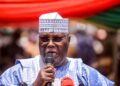
















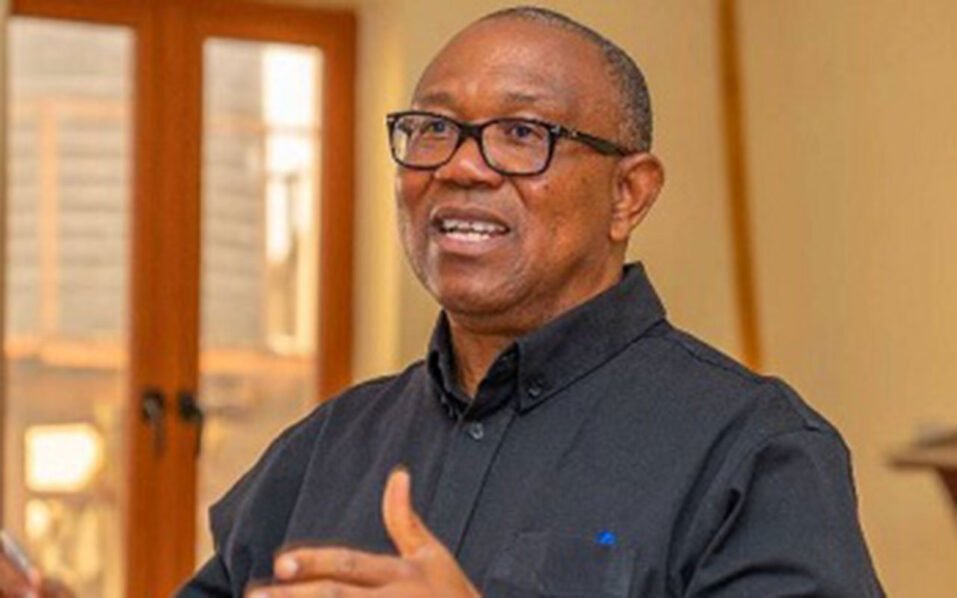
Former Anambra State Governor Peter Obi has questioned the Tinubu administration’s claims of improving macroeconomic stability, citing a United States government report highlighting corruption, insecurity, regulatory uncertainty and infrastructure challenges as obstacles to foreign investment in Nigeria.
In a statement titled Scaring Investors While Celebrating Macroeconomic Stability, Obi accused the All Progressives Congress (APC)-led government of failing to address institutional weaknesses discouraging long-term investment.
He cited the US Department of State’s 2026 Nigeria Investment Climate Statement, which identified corruption, inconsistent regulatory enforcement, judicial weaknesses, port inefficiencies and electricity supply challenges as risks to investors.
The report also raised concerns about arbitrary detention, travel restrictions and immigration enforcement in commercial or regulatory disputes involving foreign businesses.
Obi argued that the findings should have prompted urgent intervention by President Bola Tinubu to address practices capable of undermining Nigeria’s attractiveness to international investors.
He said the government should prioritise correcting the identified weaknesses rather than celebrating improvements in economic indicators.
The former governor also cited National Bureau of Statistics (NBS) figures showing that Nigeria attracted $10.37 billion in capital importation during the first quarter of 2026.
Of this amount, foreign direct investment (FDI) accounted for only $135.08 million, representing 1.3 per cent, while foreign portfolio investment contributed $9.86 billion, or 95.1 per cent.
However, the NBS figures also showed that total capital importation increased by 83.83 per cent from $5.64 billion in the corresponding period of 2025, while FDI rose by approximately 6.96 per cent year-on-year.
The United States emerged as Nigeria’s second-largest source of capital inflows, contributing $3.18 billion, or 30.69 per cent of the total, despite the investment risks highlighted in its government’s report.
The US assessment also acknowledged signs of macroeconomic stabilisation following reforms implemented by the Tinubu administration, while maintaining that structural and institutional challenges remained significant obstacles to investment.
Although portfolio investment supports financial market liquidity, foreign direct investment is generally associated with longer-term commitments to productive activities, including manufacturing, infrastructure and job creation.
The figures therefore suggest that Nigeria has recorded stronger foreign capital inflows, even as attracting sustained investment into productive sectors remains a challenge.
Obi, however, maintained that the government’s failure to address the concerns raised by the United States was inconsistent with its claims of economic progress.
“It is paradoxical that while the Tinubu administration is celebrating macroeconomic stability, it is unwittingly scaring away foreign investors. What a shame,” he said.