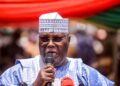

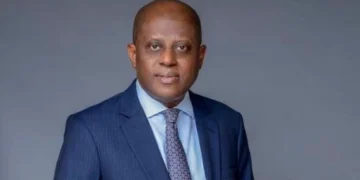
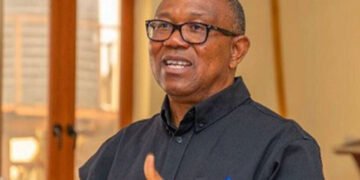







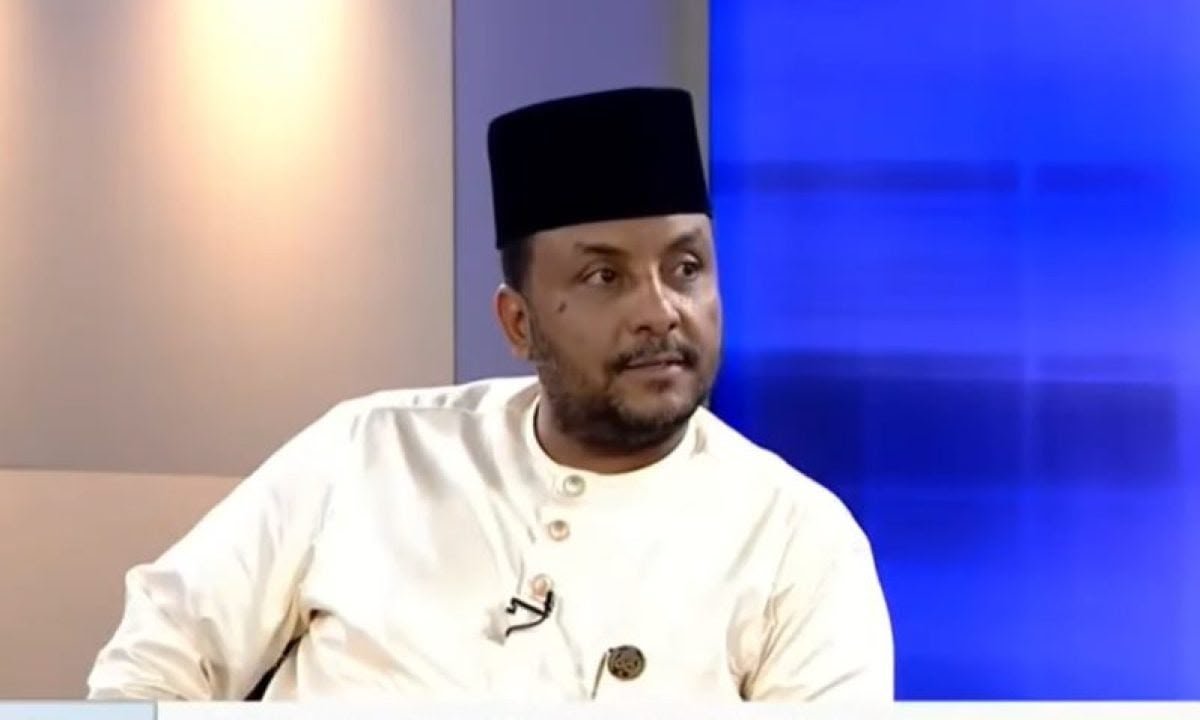
Everyone who has followed Mallam Alwan Hassan knows him to be a passionate, fierce and intelligent politician. While he is also a businessman, that is not what he projects. Those who have interacted with him would tell you that he fights for what he believes in. He makes his case, fuelled by facts, statistics and unmatched energy.
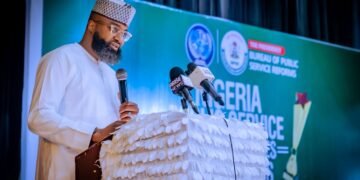
On Sunday, in line with his role as APC Presidential Campaign Spokesman, Mallam Alwan called a press conference to make the case for why President Bola Tinubu deserves reelection. Indeed, he started by saying he was making “a clear and practical case to everyday Nigerians on why we must not return our country to an era of economic carelessness—an era in which we consumed today what rightly belonged to our children tomorrow.”
Mallam Alwan based the rest of his remarks on the argument that so much has been achieved, so why go back? His explanation hinged on the fact that the President had inherited a very shaky economy on the verge of collapse—sustained by unsustainable subsidies and waste that shortchanged government revenues and starved the economy of resources for roads, schools and hospitals.
An interesting point Mallam Hassan made was that reversing this situation had been a common position, even among those claiming to oppose it today. So what changed?
“During his first term, President Tinubu embarked on economic reforms that successive administrations—and even many of those now seeking to contest against him—had repeatedly acknowledged were necessary. Yet, no one had possessed either the courage or the political will to implement them.
“Every serious economist understood that Nigeria was heading towards a fiscal crisis. Fuel subsidies had become unsustainable. We were borrowing to subsidise consumption, including fuel consumed outside our borders. We were spending trillions of naira maintaining an artificial foreign-exchange system that rewarded privileged insiders while manufacturers, legitimate businesses and ordinary Nigerians struggled to obtain foreign exchange.
“We were sitting on a time bomb. And President Tinubu chose to defuse it rather than leave it for our children.
“Let me say this clearly: the reforms President Tinubu has undertaken were unavoidable. Anyone promising Nigerians a return to unlimited subsidies, multiple exchange rates and reckless borrowing is either being dishonest or does not understand how an economy is managed. In either case, such a person cannot be trusted with the future of Nigeria.
In his remarks, Mallam Alwan highlighted how the economy had taken a turn for the better since President Tinubu’s reforms. He showed how the economy had grown, revenues had risen, the foreign exchange market had become more transparent, and the country’s fiscal outlook had improved.
Indeed, Nigeria’s macroeconomic fundamentals have improved materially since 2024, with stronger growth, higher public revenues and a more resilient external position. For instance, real GDP growth accelerated to 3.4% in 2024 and was sustained into 2025–2026, reaching 4.2% in H1 2026, driven by services, agriculture and manufacturing alongside a modest oil recovery. Federation-wide gross revenues also soared in 2024, while FAAC revenues rose from about 7.6–7.9% of GDP in 2024 to roughly 9.5% in 2025, supported by better tax administration and higher statutory collections. By mid-2026, monthly distributable FAAC revenue had reached ₦2.55 trillion, meaning that states and local governments were receiving stronger cash flows.
External reserves, too, have improved. Nigeria’s gross external reserves climbed to around US$51.5 billion by mid-2026, up approximately 38% year on year, while the naira has stabilised after FX unification, supporting confidence and planning.
One key achievement of the administration that deserves mention is the stability of the foreign exchange market and its impact on the broader economy. When foreign exchange was inaccessible and volatile, businesspeople could not plan, importers were stranded and travellers faced considerable challenges. Today, that is no longer the case. The impact has been tremendous across sectors of the economy, from aviation and finance to trade and, crucially, telecommunications, which Mallam Alwan Hassan cites in his remarks.
Hear him: “Under President Tinubu, the economic stability and greater policy clarity that have been achieved are already encouraging new investment.
“Let me cite one example which you can verify: in the telecommunications sector alone, over 3 trillion naira in new investments have been made from 2025 to date.
“These investments are credited to the stability of the economy, the confidence investors now have and the favourable economic climate their businesses are experiencing. The same story is emerging in energy, agriculture, manufacturing, technology and infrastructure. Nigeria is rebuilding its credibility as an investment destination.”
Another achievement that Mallam Alwan Hassan cites as an argument for President Tinubu’s reelection is NELFUND—the Nigerian Education Loan Fund—which he calls one of the most important social investments undertaken by any Nigerian administration.
On NELFUND, Mallam Alwan offers a perspective that is hardly appreciated. He does not dwell on the benefits to students, who are the obvious beneficiaries, but brings in the perspective of their families—those who no longer have to borrow to pay fees or even sell property. He explains that NELFUND, in effect, makes more resources available to families for other economic activities that support their livelihoods.
He also makes a case for the President on the grounds of improved security, acknowledging that challenges remain while pointing to the apprehension and neutralisation of several notorious bandits and the return of safety to the Kaduna–Abuja expressway, among other developments.
The APC spokesman concluded his conference by calling on Nigerians not to return to a “system of waste, privileged access, uncontrolled subsidies and debt-funded consumption,” which he said is being promised by Atiku Abubakar.
He said that, while such a system may appear comfortable, it consumes the future.
He closed by saying: “Nigeria is making progress under President Bola Ahmed Tinubu. We will keep that momentum. We will complete the work. And, by the grace of God and with the support of the Nigerian people, we will move from reform to recovery, and from recovery to shared prosperity, under President Tinubu through 2031.”
Ahmed Tanko Rufai is a journalist covering politics in Nigeria, he writes from Kano