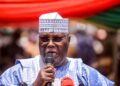








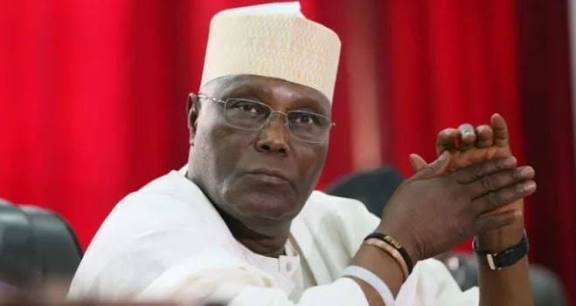
Former Vice President Atiku Abubakar has called on President Bola Tinubu to intervene to reduce petrol prices and ease the cost-of-living pressures facing Nigerians, offering to provide his policy framework to the Federal Government for implementation.
Atiku made the call in an address on fuel prices, palliatives and the cost of living, where he argued that the impact of petrol subsidy removal had spread across transportation, food prices, agriculture, manufacturing and household expenses.
He said Nigerians had borne the consequences of the subsidy removal since May 2023 without what he described as adequate protection for families, workers, farmers and businesses during the transition.
According to him, higher petrol prices have increased transportation and logistics costs, which in turn have contributed to higher prices for food and other essential goods.
“When government makes energy expensive, it makes life expensive,” Atiku said.
He also criticised President Tinubu’s earlier rejection of his call for government intervention to reduce the cost of fuel, recalling that the President had described the proposal as demonstrating “serious ignorance” of governance and the economy.
Atiku said subsequent calls by organised labour, petroleum marketers, manufacturers and other Nigerians for measures to cushion the impact of rising energy costs showed the need for the government to reassess its approach.
He argued that economic reforms should ultimately be assessed by their impact on citizens’ purchasing power, rather than solely by indicators such as GDP growth, government revenue and increased allocations.
“Economic growth must enter the home. It must enter the market basket. It must show up in the purchasing power of the worker,” he said.
Atiku also warned against relying on palliatives as a long-term response to rising living costs.
He said interventions such as food distribution and cash transfers could provide temporary relief but could not substitute for policies that address the underlying costs of energy, transportation and production.
“Palliatives manage pain. Good policy addresses the source of the pain,” he said.
Warning on Electricity Costs
Atiku further urged the Federal Government to carefully consider the planned phase-out of electricity subsidies from 2027, warning that higher electricity costs could place additional pressure on households and businesses.
He cited small businesses and manufacturers that depend on electricity and alternative power sources to operate, arguing that higher energy costs could further increase the prices of goods and services.
“The lesson of petrol must not be repeated with electricity,” Atiku said.
He urged Tinubu to use what he described as the remaining eight months of the administration’s current term to reduce the economic burden on Nigerians.
Atiku also offered to make his policy ideas and technical proposals available to the government, saying the administration could implement them under its own programme.
He said political differences should not prevent the government from adopting policies that could provide relief to Nigerians.
Atiku’s 2027 Proposal
Looking ahead to the 2027 presidential election, Atiku said that if elected, he would introduce a transparent production subsidy for petroleum products refined in Nigeria and sold to Nigerians.
He explained that the proposed subsidy would be designed to lower the cost of domestically refined petroleum products while supporting local production, employment and related economic activity.
Under the proposal, only petroleum products verified as having been refined in Nigeria would qualify for the subsidy, while imported products would be excluded.
Atiku said the programme would operate within a fixed spending limit, require National Assembly approval and be subjected to independent audits.
He illustrated the proposal using the example of a Nigerian rice miller, arguing that government support aimed at lowering production costs could make locally produced goods more affordable while increasing demand for domestic agricultural inputs and creating jobs.
Atiku said a similar approach to petroleum products could help reduce prices while strengthening domestic refining and other parts of the petroleum value chain.
He said his broader economic objective would be to ensure that increased production translates into jobs, stronger purchasing power and improved living standards.
“Nigerians do not live on statistics. They live on what their hard-earned money can buy,” Atiku said.