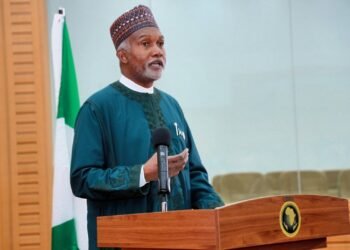

















The Executive Vice Chairman and Chief Executive Officer of the National Agency for Science and Engineering Infrastructure (NASENI), Khalil Suleiman Halilu, has been named Young African Leader of the Year by African Leadership Magazine at its annual Persons of the Year ceremony held in Accra, Ghana.
The continental honour recognises Halilu’s leadership in driving institutional reforms and industrial transformation at NASENI since his appointment in 2023 by President Bola Ahmed Tinubu to advance Nigeria’s local manufacturing and homegrown innovation agenda.
According to the organisers, the award followed a rigorous multi-stage selection process. Nominees were first shortlisted by the magazine’s editorial board based on measurable impact, leadership record, policy influence and institutional reforms across the continent.
The process was followed by a continent-wide public e-voting exercise in which Africans across several countries voted in different categories. Halilu emerged winner of the Young African Leader of the Year category after securing the highest number of votes in his class.
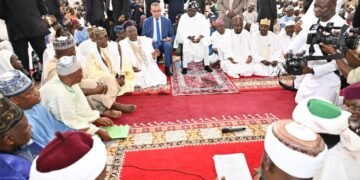
The ceremony in Accra drew prominent African leaders and dignitaries, including former Tanzanian President Jakaya Kikwete, former Ghanaian President John Kufuor, Prime Minister of Lesotho Samuel Matekane, Angola’s Vice President Esperança da Costa and Sierra Leone’s Minister of Information and Civic Education, Sheku Ahmed Fantamadi Bangura.
Speaking at the event themed “Leadership for a New Africa: Forging Our Peace, Owning Our Narrative,” Halilu said Africa’s future must be anchored on production, innovation and industrial capacity.
“At NASENI, our mandate is clear: to move Nigeria from consumption to creation,” he said.
Halilu noted that since assuming office in 2023, the agency has undergone a strategic repositioning aimed at transforming it from a research-focused institution into a platform for innovation, product development and industrial solutions.
Under his leadership, NASENI has expanded initiatives in clean energy localisation, mechanised agriculture and coal-to-fertiliser technology to support food security. The agency has also launched youth-focused innovation programmes such as Innovate Naija, DELT-Her, Shefly and FutureMakers, alongside initiatives designed to encourage greater participation of women in engineering.
He explained that these programmes are guided by NASENI’s operating principles built around the “3Cs” framework of Creation, Collaboration and Commercialisation, aimed at accelerating Nigeria’s transition towards a manufacturing-driven economy.
Referencing remarks he delivered at the West African Economic Summit (WAES) last year, Halilu reiterated that Africa’s transformation will depend on strengthening its productive capacity.
“If we do not produce what we consume, we cannot control our future,” he said.
The continental recognition comes shortly after two honours in Nigeria. NASENI recently received the Environmental Impact of the Year award from Leadership Newspaper, while Halilu was recognised by New Telegraph for Outstanding Service in Innovation and Reforms.
Concluding his remarks in Accra, Halilu called on African leaders to prioritise execution and productivity.
“The New Africa must be defined by output, not potential. The future is being built by us,” he said.