












By Eyimofe Amajuoritse
High up in the Swiss Alps, in a town better known for skiing as much as its statecraft, the world’s most consequential conversations quietly unfold. Davos, host of the annual meeting of the World Economic Forum (WEF), has over five decades evolved from a European business gathering into one of the most important convening platforms in global diplomacy and economic coordination. Under the 2026 theme, “A Spirit of Dialogue,” more than 3,000 leaders—heads of state, ministers, CEOs, multilateral institutions, investors, technologists and thinkers—assembled to navigate a world marked by fragmentation, economic uncertainty, geopolitical rivalry and rapid technological change.
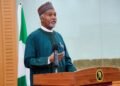
For Nigeria, participation in Davos was a strategic outing. From negotiations, to conversations on reforms; from diplomacy forging into capital, stability and opportunity for the country, at WEF26, Ambassador Yusuf Maitama Tuggar, Nigeria’s Minister of Foreign Affairs, approached the gathering with the goal of positioning Nigeria as a stabilising force in West Africa, a reforming economy open to credible partnerships, and a country intent on shaping global shifts.
In his early engagements, Ambassador Tuggar framed Nigeria’s presence within the broader purpose of Davos itself: dialogue as a stabilising instrument in a fragmented world. In an interview with TIME’s Business and Technology Senior Editor, Ayesha Javed, he set out Nigeria’s objectives for WEF26 with clarity, arguing that the question is no longer whether Nigeria can turn the corner economically, but how quickly reform can translate into sustained growth and wider opportunity. By articulating Nigeria’s reform trajectory—improved coordination, renewed investor confidence, and a recalibrated economic diplomacy—the Minister anchored Nigeria’s story in facts.
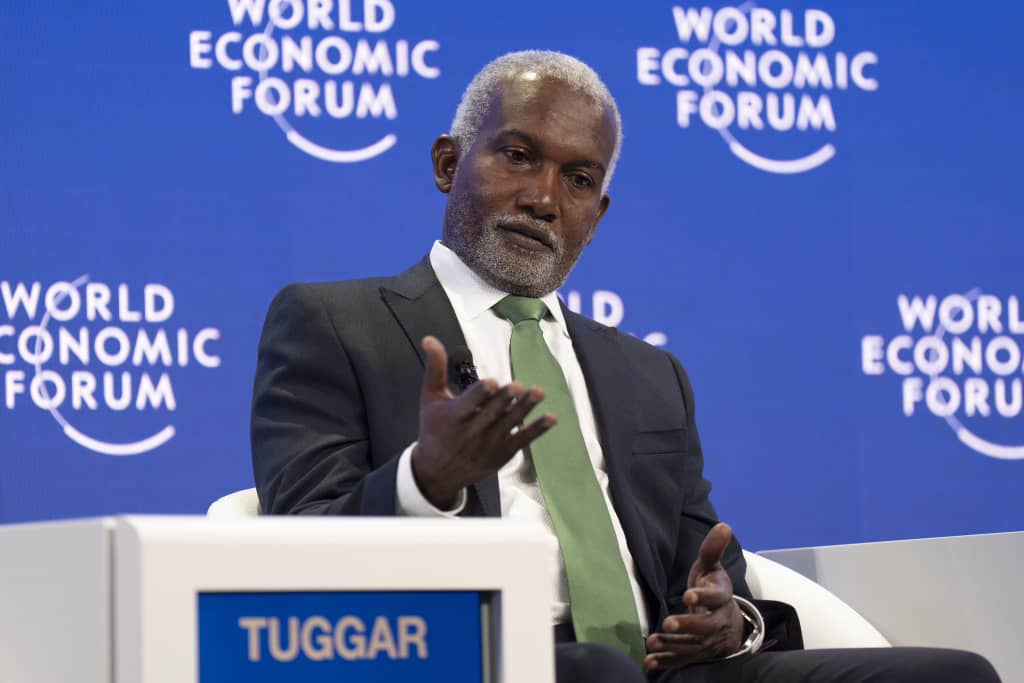
His participation in the Foreign Policy Live panel, themed “Rethinking Risk,” further reinforced Nigeria’s strategic posture. In a conversation alongside senior global figures including the Secretary-General of UNCTAD and global financial leaders, Amb. Tuggar articulated Nigeria’s approach to managing regional and geopolitical risk. He emphasised strategic autonomy—engaging partners on the basis of mutual interest without over-alignment—and underscored Nigeria’s role as a stabilising actor in West Africa. In today’s investment environment, sovereign risk perception influences capital flows as much as macroeconomic data.
Infrastructure and growth were also central to Ambassador Tuggar’s Davos diplomacy. At the WEF panel on “Resilient Infrastructure for Growth,” he made a simple but powerful argument: if resilience is the muscle, infrastructure is the bone structure. Electricity, gas pipelines and rail transport are the backbone of industrialisation and competitiveness. During the panel Ambassador Tuggar used the platform to signal Nigeria’s readiness for structured, long-horizon partnerships, by making an invitation to investors for strategic private capital into Nigeria’s priority areas.
His presence at the “Africa’s Job Engine” conversations reinforced this economic diplomacy, too. The alignment of macroeconomic reform, private capital and regional integration is essential if growth is to convert into jobs at scale. Ambassador Tuggar pointed to Nigeria’s stabilised foreign exchange, clearer power-sector rules and expanding fintech inclusion as signals that the country’ reform environment is creating space for private enterprise. Government sets the framework; the private sector creates employment. For anyone who has followed the conversations at Davos, they will acknowledge that this clarity resonates strongly here: business leaders want predictable regulatory environments more than rhetorical assurances.
Equally strategic were his engagements beyond the panels. His bilateral meetings with members of the United States Congress, including Representative Sara Jacobs, reinforced Nigeria–US relations at a legislative level. This is most-crucial at a time that the two countries had suffered diplomatic tensions which are being rebuilt, courtesy efforts of the Minister and Nigeria’s National Security Adviser, Mal. Nuhu Ribadu. Nigeria plays a stabilising role in West Africa. Ambassador Tuggar restated this at this engagement while calling for a strengthened partnership between the US and Nigeria, which is critical to security, trade and technology collaboration.
Migration, climate pressure and demographic opportunity formed another axis of Ambassador Yusuf Tuggar’s engagement. In his meeting with Amy Pope, Director-General of the International Organization for Migration (IOM), the discussion moved beyond containment to management. The conversations were around exploring cooperation on climate-induced displacement, circular migration, job creation and skills development—alongside Nigeria’s Technical Aid Corps and emerging Business Process Outsourcing opportunities. The Minister reframed migration as a developmental opportunity rather than solely a security risk. In a country with one of the world’s youngest populations, migration governance is intrinsically tied to economic diplomacy.
Technology diplomacy featured prominently as well. Meetings with Meta’s senior global policy leadership and Google’s SVP James Manyika focused on elevating Nigeria’s relationships with global digital platforms into structured strategic partnerships. Discussions around Nigeria’s AI Unit, anticipatory governance, information integrity and the Regional Partnership for Democracy were on the table; demonstrating Nigeria’s recognition that digital ecosystems now shape political stability, economic growth and social trust. For the West African region which grapples with misinformation, technological disruption and fragile security environments, collaboration with technology companies is no longer optional these conversations were crucial.
Ambassador Yusuf Tuggar’s engagement with Goldman Sachs’ President of Global Affairs, Jared Cohen, moved the conversation into the terrain of investor confidence and sovereign risk perception. He emphasised reform momentum, regional leadership and long-horizon energy infrastructure—particularly gas—as elements of transition realism. In this meeting, Nigeria’s Foreign Affairs Minister repositioned Nigeria–Goldman engagement beyond episodic financing toward sustained collaboration anchored in foresight and data.
Media engagements amplified these themes. On CNN’s One World and in discussions with the Financial Times’ Chief Foreign Affairs Columnist Gideon Rachman, Tuggar addressed Nigeria’s security challenges within broader regional dynamics and emphasised reform-led economic diplomacy that the country was embarking on. He used the platforms to situate Nigeria’s security concerns within context and scale, and countered reductive narratives that distort investment perceptions.
His meeting with Thailand’s Foreign Minister expanded Nigeria’s economic diplomacy into agro-value chains and trade collaboration, while his remarks at the Africa House Closing Ceremony under the theme of South–South collaboration articulated Nigeria’s 4Ds foreign policy framework.
Even informal conversations—whether with President José Ramos-Horta of Timor-Leste or alongside Nigeria’s Minister of Finance—underscore the quiet but important reality of Davos: diplomacy often advances through relationships built in the margins.
In all these, Ambassador Tuggar’s Davos engagements reveal his deliberate strategy. He used the platform to manage risk narratives, attract investment, deepen bilateral partnerships, strengthen technology diplomacy, and reinforce Nigeria’s role as a stabilising regional power. Davos remains one of the few arenas where dialogue can translate into delivery. For Nigeria, the value of being present in that room goes far beyond the optics. It was a meeting of strategic and beneficial outcomes. Whether in partnerships or in shaping narratives.
— Eyimofe Amajuoritse is a journalist covering Nigeria’s foreign relations.