

















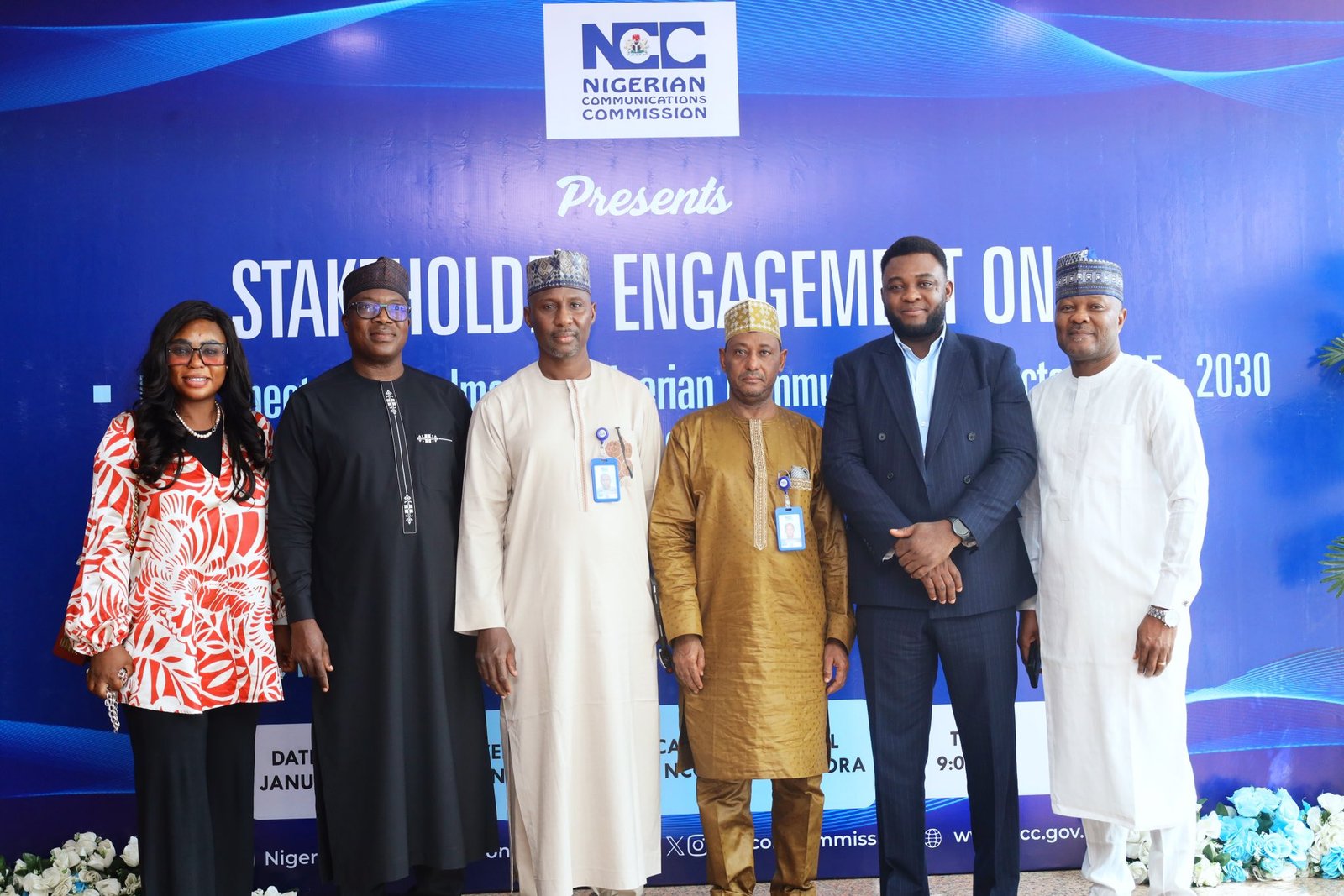
The Nigerian Communications Commission (NCC) has signaled a major shift in how radio spectrum will be managed in the country over the next five years, as it unveiled plans for a new Spectrum Roadmap (2026–2030) and proposed guidelines for opening the lower 6GHz and 60GHz bands for unlicensed use.
Speaking on January 19, 2026, at the Stakeholders’ Consultative Forum on Spectrum Roadmap 2026–2030 and Guidelines for Opening Lower 6GHz & 60GHz Bands in Abuja, the NCC’s Executive Vice Chairman (EVC), Dr. Aminu Maida, described the initiatives as critical to Nigeria’s digital future. He said the frameworks are designed to make spectrum management more predictable, transparent, and investment-friendly while supporting innovation and wider digital inclusion.
Welcoming industry players, government agencies, and technical experts to the forum, Maida said the discussions would shape policies that affect everything from mobile broadband and satellite services to financial technology, emergency communications, and smart infrastructure. He underscored the centrality of spectrum to modern digital life, noting that “spectrum may be invisible, yet it is indispensable,” as it powers mobile phones, broadband networks, and connected devices across the country.
The EVC warned that spectrum is a finite resource, even as demand continues to surge due to cloud computing, artificial intelligence, Internet of Things (IoT) applications, and data-heavy services. According to him, this makes smarter planning and more flexible regulation imperative. The new Spectrum Roadmap, he said, aims to balance growing demand with national development priorities while improving service quality and network coverage.
Beyond the roadmap, the NCC is also proposing to open the lower 6GHz and 60GHz bands for license-exempt use, a move expected to significantly expand Wi-Fi capacity in Nigeria. Maida explained that this would enable faster indoor broadband, multi-gigabit wireless systems, and better connectivity in homes, schools, hospitals, businesses, and public spaces.
He noted that globally, Wi-Fi already carries a significant share of internet traffic, and Nigeria must position itself to benefit from this trend. Opening these bands, he said, would prepare the country for future data demands beyond traditional mobile networks.
While emphasizing that the regulatory frameworks provide a strong foundation, Maida stressed that private sector investment, innovation, and stakeholder feedback would ultimately determine their success. He linked the initiative to the Federal Government’s Renewed Hope Agenda and President Bola Ahmed Tinubu’s ambition of building a $1 trillion digital economy by 2030.
The EVC also reiterated the Commission’s commitment to consultative and evidence-based policymaking, urging participants to contribute actively to the deliberations. He framed the forum as a collaborative effort to build a more innovative, resilient, and inclusive digital ecosystem for Nigeria.
The consultative forum is expected to inform final policy decisions on spectrum allocation, unlicensed access, and future licensing strategies as the NCC moves toward implementing its new roadmap.