















By Mohammad Abiodun
“When the fly perches on your scrotum, it is not the sledgehammer you use to chase it away,” goes a popular African proverb. In some other contexts, the proverb refers to a mosquito. In any instance, whichever of these insects finds its way to one’s scrotum, wisdom must be applied.
Diplomacy is wisdom. It is knowing when to speak, what to say, and how to say it. When a crisis surfaces—especially one that takes an international dimension—it requires crude wisdom to navigate through it. The United States has found Nigeria’s Christian population a “precious community”, under threat and now requiring its salvation. The world’s policeman, Uncle Sam, had initially threatened to go “guns-ablazing” into Nigeria. According to President Donald Trump: “If the Nigerian Government continues to allow the killing of Christians, the USA will immediately stop all aid and assistance to Nigeria, and may very well go into that now disgraced country, ‘guns-a-blazing,’ to completely wipe out the Islamic Terrorists who are committing these horrible atrocities.”
This was a vile, disrespectful, and unfortunate statement coming from the leader of what was once the world’s moral compass and a cornerstone of decent behaviour in the international order.
Trump clearly does not understand Nigeria’s context: the efforts of the government in dealing decisively with terrorists; the socio-cultural milieu of the Nigerian people—comprised of Christians and Muslims in near-equal measure; nor did the American leader understand the kind of criminality the country was dealing with. It was the deft engagements by the National Security Adviser, Mallam Nuhu Ribadu, supported by the Ministry of Foreign Affairs, with the United States Government—including members of Congress, the Secretary of State, and the Secretary of War—that brought some level of sanity to the room. The US government now had a fair grasp of the Nigerian situation: yes, more needed to be done in addressing insecurity challenges, but Nigeria could not do it alone. The country needed support from partners—be it the United States or Russia.
On Christmas Day, as if on a Crusader campaign, the United States launched airstrikes on criminal targets in Nigeria’s North-West region, particularly Sokoto State. Only a handful of Nigerians knew. Ninety-nine point nine per cent of the country’s population only found out when the strikes had already been carried out, in the early hours of Boxing Day.
Matters that affect geopolitics are sensitive; there must be no room for assumptions. Communication is essential in clearing uncertainties and assumptions in such matters.
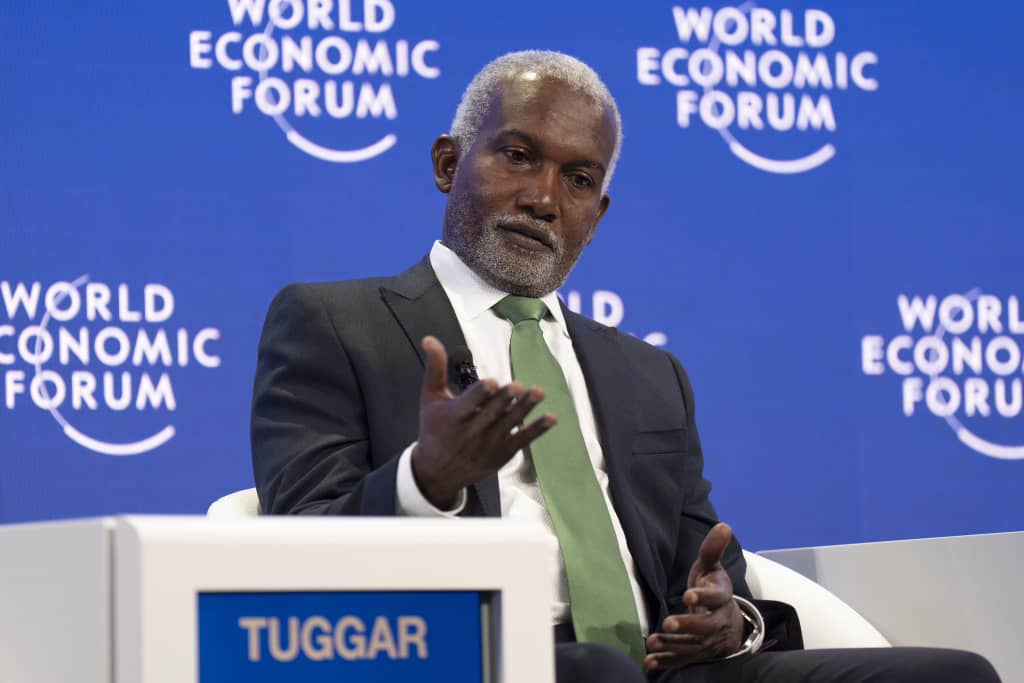
Channels TV’s Sunrise Daily morning show kicks off at 7 a.m. dot. At around 8 a.m. on Boxing Day, Ambassador Yusuf Tuggar, Nigeria’s Minister of Foreign Affairs, was a guest on the programme, clearly articulating Nigeria’s position on the US airstrikes on terrorist cells in Sokoto State. Within a couple of hours, the strikes had received international attention. CNN scrolled it as Breaking News. Al Jazeera did the same. And so did the Britons at the BBC.
Ambassador Tuggar spread himself like a blanket across multiple media platforms. After his Channels TV appearance, he was a guest on CNN, articulating Nigeria’s position and explaining what took place in Nigeria’s own words—not Donald Trump’s or the White House’s. A statement from his Ministry had, in fact, been released in the wee hours of the day. His appearances expanded on it, providing context and denying disinformation the oxygen it feeds on, which leads to fear and chaos.
On CNN, he countered the American narrative which, according to them, led to the strikes, stating that this was not a matter of religion. According to him, “This is not a problem of Muslims or Christians,” but a problem of terrorists. It was a security matter with exogenous factors—one that few fully grasp—caused by the breakdown of law and order in Libya (no thanks to America) and the growing proliferation of terrorist groups along Nigeria’s Sahel borders.
After CNN, Ambassador Tuggar was a guest on Al Jazeera News. He then had a brief engagement with the BBC, and by evening was a guest on Nigeria’s ARISE TV network.
Ambassador Tuggar was firm in his narrative: the airstrikes on the terrorists were not a unilateral decision by the United States—as was seen in the case of the capture of the Venezuelan leader. In this instance, the US government coordinated with the Nigerian government on the strikes. Nigeria provided both intelligence and the go-ahead. There was no breach of Nigeria’s sovereignty.
A single narrative he emphasised throughout his diplomatic media tour was that the airstrikes took place only after he had discussed this at length in a 19 minutes and later 5 minutes phone conversation with his United States counterpart, Secretary of State Marc Rubio, and subsequently obtained the approval of President Bola Ahmed Tinubu—much earlier, before the strikes took place.
Another narrative Ambassador Tuggar left unambiguous was that Nigeria is not lacking the willpower to address insecurity challenges, and that while it does not possess all the resources required to deal completely with terrorists within its borders, the country is willing to welcome support from superpowers like America. The jointly coordinated airstrikes by the US and Nigeria were proof that the country is committed to working with partners across the world to address its security challenges.
Today’s world is a 24/7 information environment. Every second, a tweet is pushed out. A Facebook post is crafted. And a photo is making its way to Instagram. From CNN to Nigeria’s NTA, news is now an unending circle. It does not pause for the day. If you do not put out your narrative, someone else will.
Take a second to imagine if Ambassador Tuggar had not made a timely intervention after the US–Nigeria coordinated strikes took place: the world would have gone with the single, dangerous, and false narrative that it was a unilateral strike—one that crossed the lines of Nigeria’s sovereignty.
In moments like this, diplomats like Ambassador Tuggar must articulate their nation’s position and interests. They must shape the right perception through the right communication. The information environment we live in today does not care two straws whether it is Christmas or Boxing Day. Nigeria’s Minister of Foreign Affairs was spot on.
Mohammed Abiodun is a researcher and historian, he writes from Abuja.