


















By Eyimofe Amajuoritse
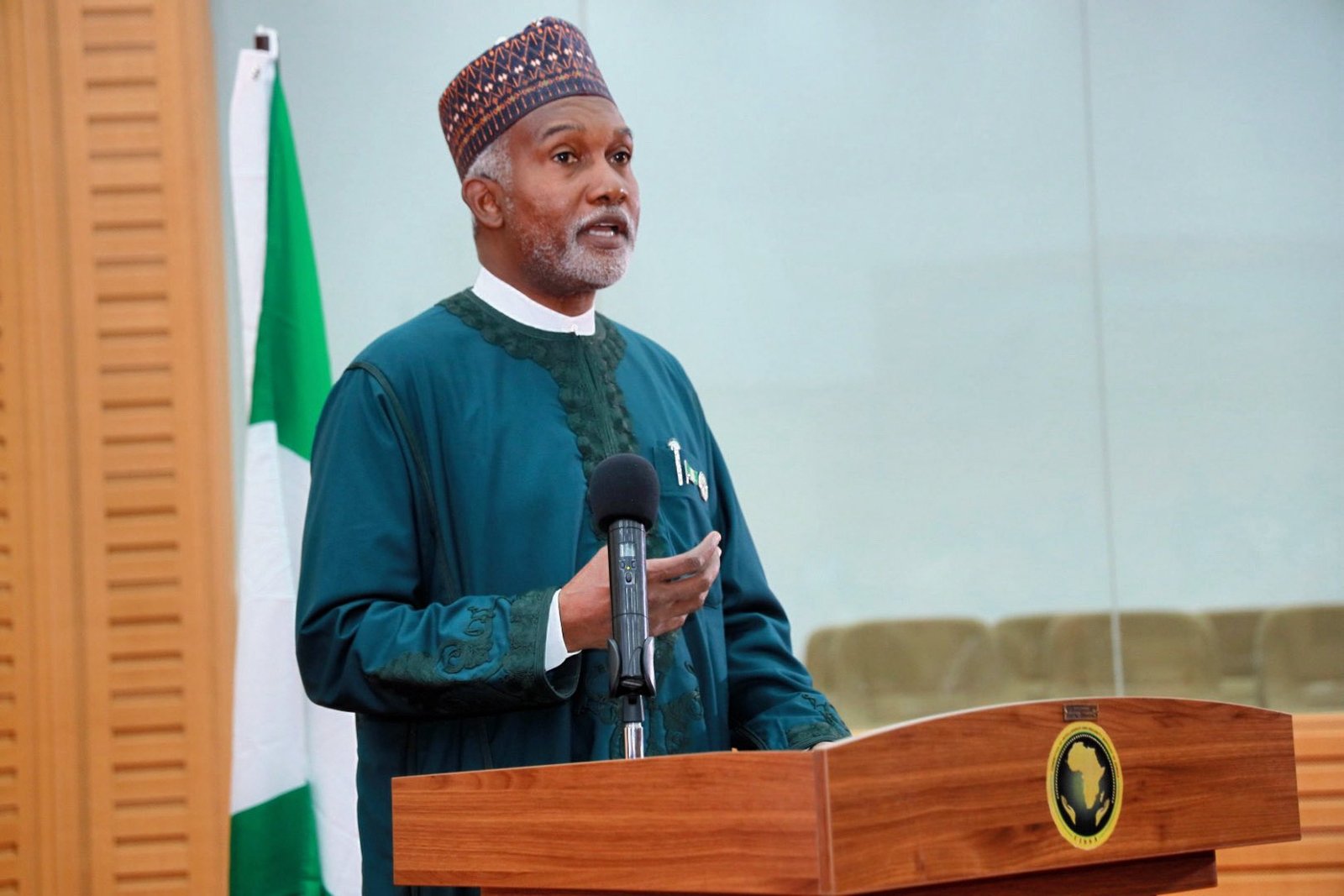
Amb. Yusuf Maitama Tuggar does not easily blend into the background. His striking all-white hair often makes him instantly recognisable in diplomatic gatherings. Yet what truly sets Nigeria’s Minister of Foreign Affairs apart is not his appearance, but the measured style of diplomacy he has steadily cultivated—bold, strategic, and subtly assertive.
Since 2026 began, Ambassador Tuggar has undertaken a schedule of deliberate and purposeful diplomatic rhythm. From bilateral engagements in Türkiye to high-level conversations with technology leaders and commodity organisations, his engagements have consistently centred on projecting Nigeria’s economic strength and strategic relevance.
At the New Year reception for ambassadors in Abuja, he set the tone for the year by outlining three foreign-policy anchors—strategic autonomy, regional stability, and responsible global partnership—principles designed to guide Nigeria’s navigation of an increasingly fragmented global order. Whether it is the US-Israel-Iran war and the consequential effects on the global economy, or the Russian-Ukraine conflict, currently in its third year, or the rise in a multipolar global order, the activities defining global events today increasingly make these anchors crucial.
Nowhere has this style been more evident than in his multilateral engagements. At the 2026 summit of the African Union in Addis Ababa, Ambassador Tuggar reinforced Nigeria’s leadership within Africa by signing a diplomatic visa waiver agreement with Angola and participating in discussions on strengthening democratic governance across the continent. Through platforms such as the Regional Partnership for Democracy—an initiative he launched in collaboration with the United Nations Development Programme—he has emphasised the need to restore trust in democratic institutions while strengthening cooperation among African states.
Democracy has a crucial role to play in stabilizing Africa. Democracy builds trust between leaders and their citizens. It keeps the leaders on their toes, and ensures that the principles of the social contract between the governed and the government are adhered to and enforced. It also promotes a free market that spurs economic activities. Africa, which still lags behind needs these right now. Importantly, the continent needs to define the kind of democracy that works for its people.
Beyond the conversation on Africa, Ambassador Tuggar has continued to situate Nigeria within global conversations on economic resilience, energy, and security. His participation in the Commonwealth Foreign Affairs Ministers Meeting in London, alongside discussions at Chatham House on West African security, underscored Nigeria’s role as both a regional stabiliser and a constructive international partner. In parallel, economic diplomacy has remained a constant thread—from conversations about Nigeria’s potential full membership in the Council of Palm Oil Producing Countries to strategic dialogue with Google on digital partnerships.
At the heart of these engagements is the doctrine Ambassador Tuggar has consistently championed since assuming office: Nigeria’s 4D diplomacy—democracy, development, demography, and diaspora. Rather than treating foreign policy as an abstract exercise, he has consistently tied diplomatic outreach to tangible national outcomes, from economic diversification and food security to technology investment and regional stability.
His style is firm yet composed, intellectual yet pragmatic. He prefers persuasion to provocation and strategy to noise. On panel discussions, whether at the Chatham House or at AU Summits, Nigeria’s Foreign Affairs Minister can always be heard making a firm case for his country—why we are leaders, why we matter, why our economy is crucial, and why we must continue to have a seat at the table. The result is a form of diplomacy that may be understated in tone but is increasingly visible in its impact—one that reinforces Nigeria’s standing as a confident, influential voice in Africa and beyond.
In the crowded halls of international diplomacy, Ambassador Tuggar’s approach is different: he commands attention not through volume, but through clarity of purpose and strategic poise. And in doing so, he continues to shape a foreign policy that positions Nigeria not merely as a participant in global affairs, but as a country capable of shaping them.
* Eyimofe Amajuoritse is a journalist covering Nigeria’s foreign relations.