
















The Federal Government has intensified efforts to equip millions of Nigerian youths with market-relevant skills, calling on global partners, industry leaders, and policymakers to deepen collaboration in driving job creation and economic growth.
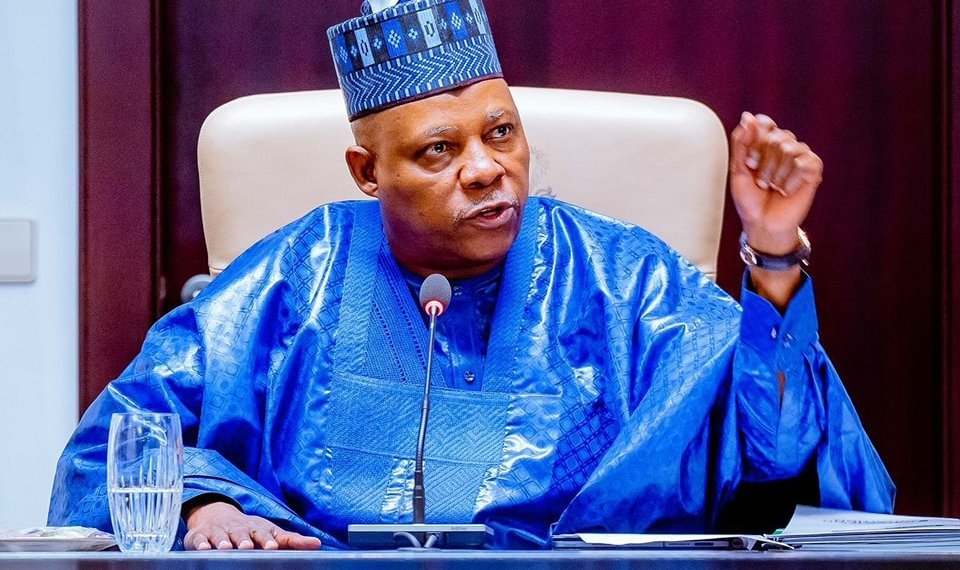
Vice President Kashim Shettima made the call on Tuesday in Abuja while declaring open the National Skills and Industry Alignment Roundtable Series (Q1 2026), themed “Bridging Skills Supply and Labour Market Demand.”
The roundtable, convened by the Office of the Vice President with support from the European Union, brought together key stakeholders to address gaps between training and employment in Nigeria.
Represented by Deputy Chief of Staff to the President, Ibrahim Hassan Hadejia, the Vice President said Nigeria must transition from fragmented interventions to a coordinated national system where skills translate directly into jobs and enterprise.
He noted that although Nigeria has one of the world’s largest youth populations, many available jobs remain informal and disconnected from productivity and long-term economic growth.
“The challenge is not simply job creation; it is alignment. Nigeria does not have a talent problem. Until skills meet industry demand, job creation will remain below its full potential,” Shettima said.
The Vice President emphasised that the Tinubu administration is prioritising a shift towards a structured ecosystem in which government enables while the private sector leads job creation.
According to him, previous engagements — including a national mapping of the job creation ecosystem and a high-level policy dialogue — underscored the need for stronger coordination across stakeholders.
He added that the roundtable series is designed to move beyond discussions to measurable outcomes by linking education, training, and employment more effectively.
“Job creation cannot be outsourced to government alone. Industry must take its place not just as employers but as co-creators of the workforce Nigeria needs,” he said.
Also speaking, Minister of Housing and Urban Development, Ahmed Musa Dangiwa, highlighted the role of skills development in addressing Nigeria’s housing deficit, noting that the sector requires a wide range of skilled professionals — from engineers to artisans.
He said strengthening skills across the construction value chain would not only support housing delivery but also stimulate broader economic growth.
On his part, the EU Head of Cooperation for Nigeria and ECOWAS, Massimo De Luca, reaffirmed the bloc’s commitment to supporting Nigeria’s skills ecosystem, noting ongoing collaboration with development partners including the Tony Elumelu Foundation.
He said the EU’s approach focuses on building skills within sectors where they are most needed, while embedding programmes such as the 3MTT into a broader national framework.
Senior Special Assistant to the President on Delivery and Coordination, Akubo Adegbe, described the roundtable as part of a sustained effort to improve coordination across Nigeria’s job creation ecosystem.
Participants at the event included representatives of the organised private sector, the German Agency for International Cooperation, and the Aliko Dangote Foundation.
The Federal Government said the initiative marks a shift towards deliberate, coordinated action aimed at connecting skills development with real economic demand, as part of broader efforts to drive sustainable growth and employment.