


















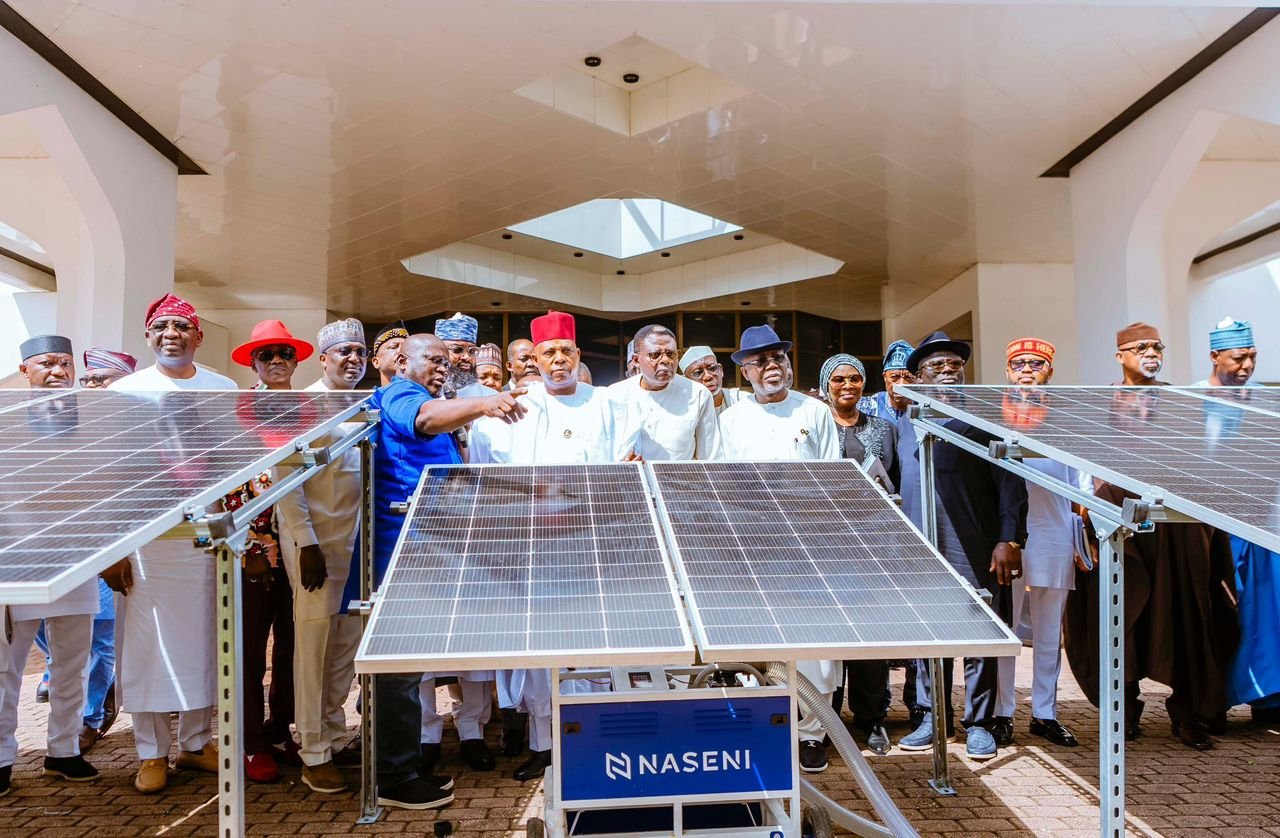
In the sun-scorched farmlands of Nigeria, where 96% of agriculture still depends on the mercy of rainfall, there is a quiet revolution that is beginning to hum. It is the near-silent whir of solar panels tilting toward the sky, drawing water from the earth below and with it, the promise of year-round harvests.
The National Agency for Science and Engineering Infrastructure (NASENI) is rolling out solar irrigation pumps across the country, and for Nigeria’s smallholder farmers—the backbone of the nation’s food system—this intervention represents a potential lifeline out of poverty, a shield against climate uncertainty, and a practical answer to some of the country’s most stubborn social challenges.
Let me explain in details. For generations, Nigerian smallholders have watched their livelihoods dictated by the calendar. They can only plant when the rains come. Then harvest before they stop. Wait. Repeat. This dependence on rainfed agriculture has locked farmers into a cycle of seasonal vulnerability, where a delayed raining-season or early harmattan can mean the difference between eating and going hungry.
Solar irrigation pumps dismantle this tyranny of the weather. By tapping groundwater, rivers, or boreholes without requiring fuel or grid electricity, these photovoltaic-powered devices enable farmers to cultivate dry-season cash crops—tomatoes, peppers, green-leafy vegetables—when market prices peak and competition is low.
An agricultural economist described it thus: “This is about giving farmers control over their own productivity for the first time.”
The financial mathematics are striking. Diesel pumps, the traditional alternative for farmers seeking to irrigate, can consume up to 70% of their operating budgets in fuel costs alone. Solar pumps eliminate this burden almost entirely. After the initial investment—increasingly accessible through pay-as-you-own financing models—the sun does the work for free.
Freed from fuel expenses, farmers can invest in better seeds, fertilizers, or expand their cultivated land. Increased productivity per hectare means higher incomes, which flow into local economies—school fees get paid, medical care becomes affordable, small businesses emerge to serve newly prosperous communities.
NASENI’s distribution strategy recognizes that technology alone doesn’t create transformation; accessibility does. By working to make these systems affordable and available at scale, the agency is directly addressing one of Nigeria’s core contradictions: a nation blessed with agricultural potential yet dependent on massive food imports.
For me, the brilliance of NASENI’s solar pump initiative lies in its intersectional impact. It simultaneously tackles three of Nigeria’s most pressing social imperatives.
Food security improves when farmers can grow crops year-round, reducing the country’s reliance on imported rice, tomato paste, and other staples that drain foreign reserves and make Nigeria vulnerable to global price shocks.
Job creation follows naturally—not just for farmers themselves, but for the technicians who install and maintain the systems, the traders who market the increased produce, and the auxiliary services that spring up around more vibrant agricultural communities.
Well-being advances when families have reliable income, nutritious food, and hope for the future. Solar irrigation doesn’t just change farming; it changes the social fabric of rural Nigeria.
As climate change makes rainfall patterns increasingly erratic, solar irrigation offers smallholders what they have rarely had: resilience. Droughts that would previously devastate entire harvests become manageable challenges. Farmers can respond to changing weather rather than simply endure it.
The environmental calculus is equally compelling. By replacing diesel pumps, solar systems slash greenhouse gas emissions while demonstrating that climate adaptation and mitigation can happen simultaneously. Nigeria’s farmers become part of the global climate solution rather than victims of it.
NASENI’s solar pump distribution represents the kind of practical, dignified intervention that development programs should promise.
The challenge now is scale. Millions of Nigerian smallholders could benefit from this technology. Each pump installed is a family lifted, a community strengthened, a small victory against the structural poverty that has plagued rural Nigeria for too long.
In fields across the country, solar panels are catching the light. Beneath them, water flows. And with it, quietly, the future begins to grow.
— Sandra Pam Gyang is a technology enthusiast and writes from Abuja.