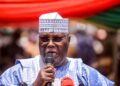









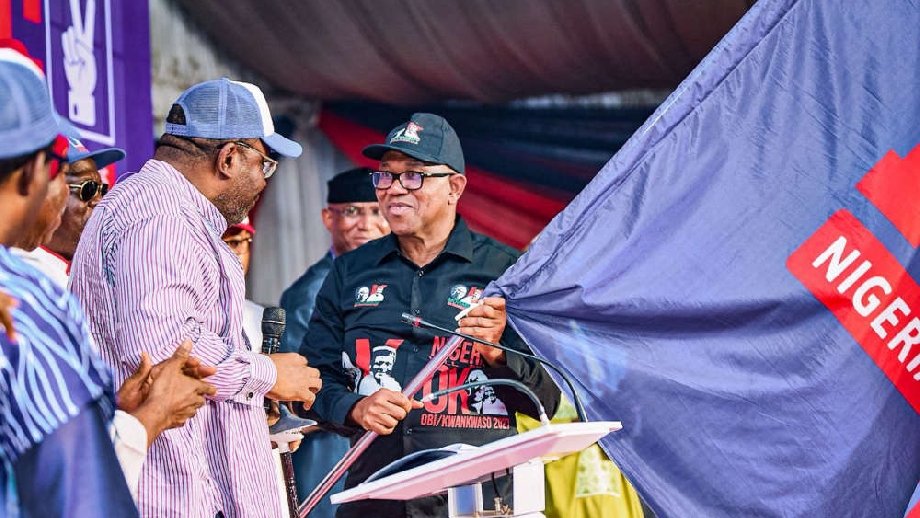
Former Anambra State Governor, Peter Obi, has formally accepted his nomination as the presidential candidate of the Nigeria Democratic Congress (NDC), pledging to tackle insecurity, hunger, unemployment and poor governance while unveiling former Kano State Governor, Rabiu Kwankwaso, as his running mate for the 2027 presidential election.
Speaking at the party’s national convention in Abuja on Saturday, Obi said Nigeria was at a critical moment and required leadership capable of restoring hope, strengthening national unity and rebuilding public confidence in government.
The former Labour Party presidential candidate expressed gratitude to party leaders, delegates and supporters for entrusting him with the presidential ticket, insisting that “a New Nigeria is Possible.”
According to him, the 2027 election would not be about his personal ambition but about the future of Nigeria and the need to address the challenges confronting millions of citizens.
Obi said national unity would be central to his administration, stressing that Nigeria could not make meaningful progress while divided along ethnic, religious and regional lines.
“Nigeria cannot advance while fragmented by ethnic, religious, regional, or narrow political divides. We may communicate in different languages and practise diverse faiths, but we share a singular destiny under one flag,” he said.
On security, Obi expressed concern over the worsening security situation in the country, citing global terrorism rankings that showed Nigeria moving from the eighth most affected nation in 2022 to fourth place in 2026.
He promised an intelligence-driven and technology-enabled security architecture, alongside efforts to address poverty, unemployment and marginalisation, which he described as major drivers of insecurity.
“Our strategy will be intelligence-driven, technology-enhanced, proactive and community-focused. We will strengthen our security institutions, improve coordination and support our security personnel,” he said.
The NDC candidate also outlined ambitious targets for the health sector, promising to more than double health insurance coverage from the current level within four years and increase healthcare spending to at least 10 per cent of Gross Domestic Product.
He pledged to ensure that all 8,809 wards in the country would have functional primary healthcare centres while raising the number of operational primary health facilities nationwide to at least 50 per cent before the end of his first term.
On education, Obi said investment in schools, teachers, technology and vocational training would form a key pillar of his administration’s development strategy.
“Education will remain at the forefront of our national revival because no nation can rise above the quality of its educational system,” he stated.
Addressing food security concerns, Obi described Nigeria’s growing hunger crisis as unacceptable despite the country’s vast agricultural resources.
He argued that transforming agriculture and moving the country from consumption to production would provide a sustainable pathway to reducing poverty and boosting economic growth.
The former governor also promised significant reforms in the power sector, committing to increase electricity generation and distribution by at least 10,000 megawatts within four years.
He further pledged support for micro, small and medium enterprises through tax incentives, affordable financing and policies aimed at creating jobs for young Nigerians.
Obi promised to reduce corruption, cut the cost of governance, uphold the rule of law and strengthen democratic institutions, assuring Nigerians that public resources would be managed transparently and accountably.
“Our democracy will be pursued with integrity, fairness and transparency, while opposition parties will be respected and constructively engaged,” he said.
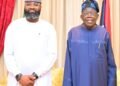
In a major announcement that drew applause from party supporters, Obi named former Kano State Governor and leader of the Kwankwasiyya Movement, , as his vice-presidential candidate.
“I hereby accept my affirmation and nominate Senator Rabiu Kwankwaso as my Vice President,” Obi declared.
The announcement sets the stage for what is expected to be a highly competitive contest ahead of the 2027 general election as opposition parties seek to challenge President and the ruling APC.