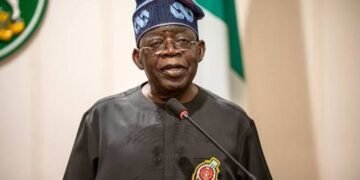









President Bola Ahmed Tinubu has said the economic reforms implemented by his administration over the past three years have laid a strong foundation for Nigeria’s long-term growth, arguing that difficult policy decisions taken since 2023 have helped stabilise the economy and restore investor confidence.
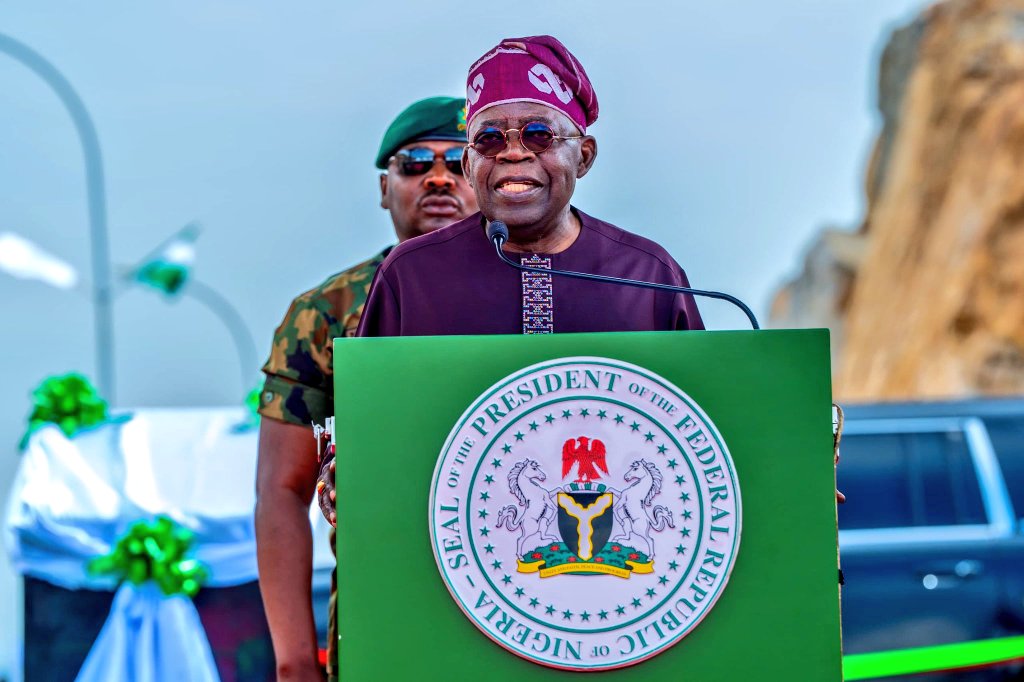
Speaking in a nationwide broadcast on Thursday to mark the third anniversary of his administration, Tinubu acknowledged the hardship experienced by many Nigerians following the removal of fuel subsidies and foreign exchange reforms but maintained that the measures were necessary to avert a deeper economic crisis.
According to the President, his administration inherited severe fiscal and structural challenges, including mounting debt-servicing costs, declining revenues, exchange-rate distortions, insecurity, energy supply constraints and weak public confidence in government institutions.
He noted that Nigeria was spending as much as ₦18.4 billion daily on petrol subsidies before the policy was discontinued, while multiple exchange-rate windows encouraged arbitrage and speculative activities that cost the country trillions of naira.
“The situation demanded urgent and courageous action. Difficult but necessary decisions had to be taken to stabilise the economy and prevent a deeper national crisis,” Tinubu said.
The President stressed that while the reforms imposed significant short-term costs on households and businesses, the country is now beginning to reap the benefits.
“I can say with confidence that Nigeria has stabilised and is moving forward again,” he stated.
Tinubu pointed to improving public finances, increased revenues available to states and local governments, rising investor confidence and strong capital market performance as indicators of recovery.
He said the Nigerian stock market has witnessed remarkable growth since 2023, with market capitalisation rising from about ₦30 trillion when he assumed office to approximately ₦160 trillion this year.
The President also highlighted ongoing infrastructure projects across the country, revealing that more than 2,700 kilometres of highways and major roads are currently under construction, reconstruction or rehabilitation.
Among the projects he listed are the Lagos-Calabar Coastal Highway, the Sokoto-Badagry Super Highway, the Abuja-Kaduna-Zaria-Kano Road and the East-West Road, alongside numerous rural access roads designed to improve connectivity and support economic activity.
Tinubu said rail modernisation projects are equally progressing to strengthen logistics, transportation and economic integration across the federation.
In the oil and gas sector, he said reforms have attracted fresh investments and improved investor confidence, while the NLNG Train 7 project is nearing completion and domestic refining capacity continues to expand.
According to him, increased local refining and growing gas utilisation are helping to strengthen energy security, reduce dependence on imported petroleum products and conserve foreign exchange.
The President also highlighted ongoing efforts to address long-standing challenges in the power sector through the settlement of legacy debts, expansion of transmission infrastructure, investment in renewable energy and improvements to the national grid.
“No modern economy can grow in darkness,” he said, adding that improved electricity supply remains critical to industrial growth, job creation and economic development.
Tinubu further cited progress in agriculture, education, housing and healthcare as evidence of the administration’s broader development agenda.
He disclosed that agricultural interventions have supported millions of farmers through improved access to inputs, mechanisation, irrigation, financing and markets.
On education, the President said the Nigerian Education Loan Fund (NELFUND) has provided financial support to more than 1.5 million students, with over ₦282 billion disbursed to beneficiaries.
He also noted that the Renewed Hope Housing Programme and projects being executed by the Federal Housing Authority are expected to deliver more than 10,000 housing units across 14 states and the Federal Capital Territory while creating over 300,000 jobs.
Tinubu said his administration has taken steps to stabilise the telecommunications sector and encourage fresh investments in digital infrastructure, describing connectivity as a critical driver of modern economic growth.
“A connected Nigeria is a more competitive Nigeria,” he said.
Addressing young Nigerians, the President pledged continued investment in digital skills, technical education, entrepreneurship and innovation, describing the country’s youth population as the engine of future growth.
On security, Tinubu said the Armed Forces and other security agencies have intensified operations against terrorists, bandits, kidnappers and other criminal groups, while investments in intelligence, surveillance and logistics are being expanded.
While acknowledging that security challenges remain, he expressed confidence that ongoing efforts are gradually restoring peace and stability in affected communities.
The President said the government’s focus in the coming years would be to ensure that the benefits of ongoing reforms translate more directly into improved living standards through lower food prices, reduced transportation costs, expanded enterprise opportunities and increased job creation.
He called on Nigerians to remain united and hopeful, stressing that national renewal requires patience, resilience and collective effort.
“We have not solved every problem, and we are not yet where we want to be. But the foundation for recovery has been laid,” Tinubu said.
As his administration enters its fourth year, the President expressed optimism that Nigeria would emerge stronger, more prosperous and more competitive, urging citizens to continue believing in the country’s future and support efforts aimed at sustaining the reform agenda.