













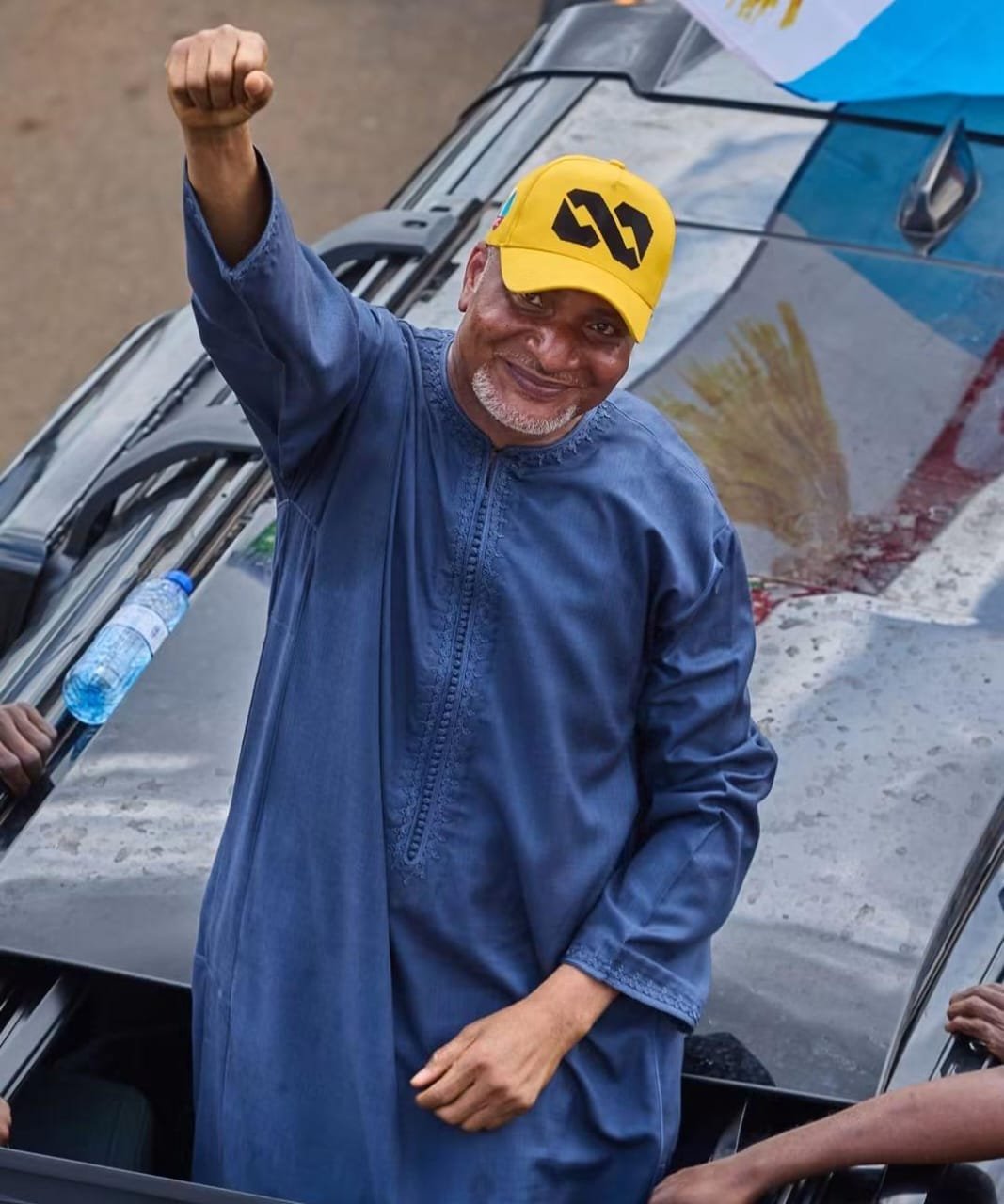
There are statements politicians make to answer questions. There are statements they make to make news. And there are statements which escape the television studio, acquire legs of their own and march straight into the marketplace. Senator Saliu Mustapha’s “1PM victory against Abdulrahman Abdulrazak” statement belongs to the third category.
Last Friday, the Senator representing Kwara Central sat across from Seun Okinbaloye on Channels Television. It was supposed to be an interview, but it became, at some point, something close to a political confession booth.
Mustapha spoke about his relationship with Kwara State Governor, AbdulRahman AbdulRazaq. He narrated his own account of how friendship became estrangement, how political cooperation deteriorated into rivalry, and how the house that the _Otoge_ Revolution built became a theatre of internecine warfare. But one sentence swallowed almost everything else.
Asked about the coming electoral contest between himself and the governor, Mustapha did not merely predict victory. He put a time to it. Before 1PM. Not 6PM when counting might have started in many places, not midnight when politicians traditionally begin their mathematics of hope and despair. He said, one o’clock in the afternoon.
That statement has since travelled far beyond the Channels Television studio. It has become a clip, a joke, a slogan, a boast and, depending on which side of the political fence you sit, either an audacious prophecy or an invitation to political nemesis.
But dismissing “1PM” merely as the boast of a confident politician misses its significance. Politics is fought on two battlefields. One is the polling booth, the other is the human mind. The second battle often begins long before the first. And that is where _Àpẹ̀mára_ comes in.
The Yoruba understand the power of the spoken word in ways that sometimes defy literal English translation. Words are not always regarded as mere arrangements of vowels and consonants. They can be summonses, they can be prayers. They can be declarations with which a man announces to himself, his friends and his adversaries the future he has chosen to inhabit.
_Àpẹ̀mára la á pè tẹ́mi dire_ — call goodness unto yourself; proclaim the outcome you desire. The farmer does not go to his farm at dawn singing about famine. The hunter entering the forest does not compose an elegy for himself. The warrior does not approach the battlefield rehearsing the speech he will give after his defeat. He invokes victory.
That is what Saliu Mustapha’s 1PM declaration essentially does. It is _Àpẹ̀mára_ translated into political language. He has called victory by name, given it an appointment and even fixed the hour of its arrival. That is why the most interesting thing about the 1PM statement is not its literal possibility, it is its psychological purpose.
Mustapha was not speaking only to Seun Okinbaloye. He was speaking to his supporters: Do not be afraid. He was speaking to undecided voters: This contest is winnable. He was speaking to political defectors still standing at the junction: The train is moving; decide quickly whether you want to be aboard. And, perhaps most importantly, he was speaking to his opponent: I do not fear you.
Political contests are partly contests of confidence. Nothing frightens a political army more than discovering that its general doubts victory. Conversely, nothing energises supporters like seeing their candidate walk into battle behaving as though the trophy already bears his name.
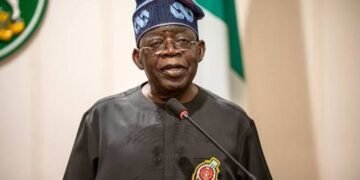
There is a relatively recent precedent. In June 2022, President Bola Ahmed Tinubu went to Abeokuta and detonated two Yoruba words into Nigerian political history: *_Ẹ̀mí ló kàn_*. (It is my turn). This statement generated outrage. But something else happened. The phrase became a movement. Two words condensed an entire political argument into a battle cry. Tinubu did something fundamental to political psychology that day: he stopped speaking like an aspirant seeking permission to run and started speaking like a man announcing his destination.
Saliu Mustapha’s “1PM” carries something of that political audacity. He is no longer merely saying, “I believe I can win.” Every politician says that. He is saying: I will win so decisively that we will not need the darkness of night to know where the election has gone. That is the message.
And there is another reason Mustapha can afford the swagger. Confidence becomes foolishness when it has no evidence beneath it. The Senator, however, can point to certain political assets.
First is his relationship with his constituency. Senator Saliu Mustapha is not a stranger attempting to introduce himself to Kwara Central on the eve of an election. He currently represents the district in the Senate. Beyond elected office, he carries the traditional title of Turaki of Ilorin and has over the years cultivated a political and social network that reaches deep into communities.
His second argument is performance. Three years in the Senate have given the electorate something more substantial upon which to judge him than campaign promises. For a politician operating in an environment where his relationship with the state’s political establishment has been anything but cordial, Mustapha has sought to demonstrate that political hostility does not have to become an excuse for governmental infertility.
Since Friday, I’ve asked those that are agitated or disgusted about the statement to tell me what they would have done if they were in Mustapha’s shoes. They ask: How dare he say he will defeat a sitting governor by 1PM? The more useful question may be: Why shouldn’t he say it? What should a man entering a political contest say? That he hopes to lose honourably by 4PM? Should he announce that his opponent will defeat him before lunch?
Mustapha has chosen his prophecy. He says 1PM.
Those who find his confidence excessive are equally free to make their own predictions. That is the beauty of democracy. Everybody is entitled to his prophecy; eventually, the ballot box separates prophets from poets. If it reaches their turn, let them say they will lose.
Until then, Senator Saliu Mustapha has done what Yoruba political culture understands very well.
He has performed his _Àpẹ̀mára._ He has named his victory. He has summoned it. And, with extraordinary audacity, he has even told it what time to arrive. 1PM. That is political psychology 101.
Will Saliu Mustapha actually defeat AbdulRahman AbdulRazaq before 1PM? Only the voters can answer that question when election day comes.
Segun Oyewo writes from Igosun, Oyun LGA