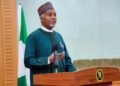

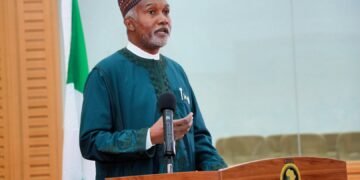












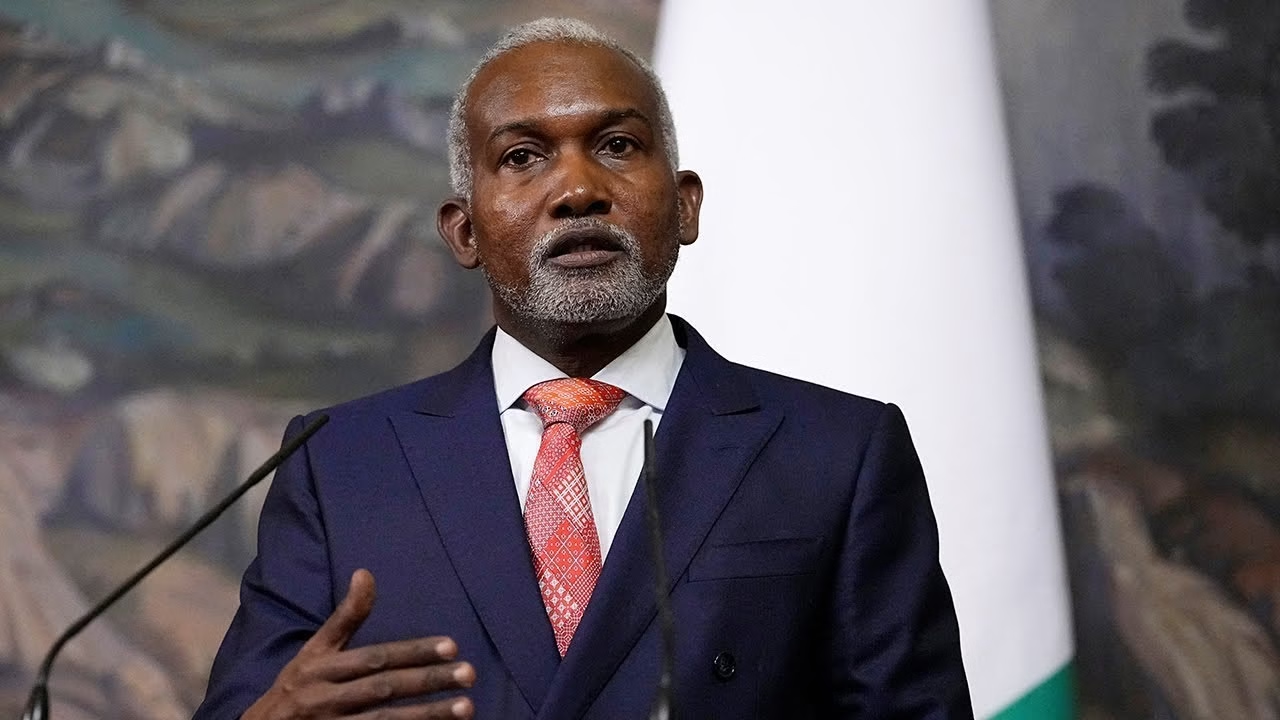
Nigeria’s immediate past Minister of Foreign Affairs, Ambassador Yusuf Tuggar, has condemned the growing wave of xenophobia and Afrophobia in South Africa, describing the targeting of Nigerians and other black Africans as a betrayal of the ideals of Pan-Africanism and the continent’s shared struggle against colonialism and apartheid.
Tuggar, who spoke on Thursday while chairing the Bridge Club’s 2026 Grand End-of-Year Event in Lagos, argued that discrimination against fellow Africans was particularly troubling given the sacrifices made by Nigeria and other African countries in the struggle to dismantle apartheid in South Africa.
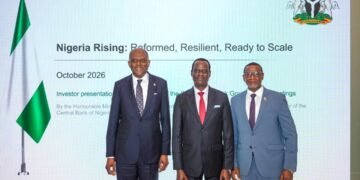
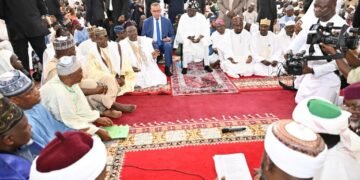
The event, themed “Xenophobia Contradicts Pan-Africanism,” brought together accomplished professionals, business leaders and prominent African voices to examine the ideals of African solidarity, the challenges of migration, the protection of human dignity and practical measures for strengthening cooperation and integration across the continent.
Among the prominent personalities featured at the gathering were renowned Kenyan scholar and Pan-Africanist, Professor P.L.O. Lumumba, and the Chairman and Chief Executive Officer of the Nigerians in Diaspora Commission (NiDCOM), Hon. Abike Dabiri-Erewa.
Reflecting on Nigeria’s historic contributions to the liberation of Southern Africa, Tuggar recalled how the country provided scholarships to victims of apartheid, mobilised financial support for the anti-apartheid struggle and deployed its diplomatic influence to advance the cause of African freedom.
He recalled that following the 1976 Soweto massacre, Nigeria welcomed South African students fleeing apartheid, providing them with full scholarships and opportunities to continue their education alongside Nigerian students.
According to him, similar gestures were extended to Namibians, Angolans and other Africans living under oppressive regimes.
Tuggar also recalled the establishment of the South African Relief Fund, which mobilised contributions from Nigerians, as well as Nigeria’s leadership in international diplomatic efforts against apartheid.
He cited the role of Nigeria’s former Ambassador Leslie Harriman, who chaired the United Nations Committee Against Apartheid, and the country’s decision to nationalise Barclays Bank and British Petroleum as examples of the sacrifices made in pursuit of African liberation.
“These are but a very few of the reasons why Nigerians cannot fathom why they and other black Africans are being targeted in South Africa,” Tuggar said.
“Call it Afrophobia, which may be a better description than Xenophobia (as non-black Africans appear to be exempted) or the more euphemistic framing anti-migration protests, it is wrong and must be condemned.”
He maintained that the hostility towards African migrants was especially concerning at a time when Nigeria’s foreign policy framework of Strategic Autonomy places considerable emphasis on the diaspora and the protection of the dignity of Nigerians abroad.
The former Minister, however, cautioned that addressing xenophobia required a deeper understanding of the historical, political and economic circumstances that continue to shape attitudes towards migration in South Africa.
Tracing the roots of the problem to colonial systems of segregation, Tuggar argued that policies designed to divide African populations along racial, ethnic and economic lines had left psychological scars that continued to influence contemporary societies.
He drew parallels between the colonial policies of Lord Frederick Lugard in Nigeria and the institutionalisation of segregation under successive South African leaders, including Jan Smuts and P.W. Botha.
According to him, apartheid did not merely divide people along racial lines but also institutionalised economic and social divisions, creating a legacy of exclusion that remains difficult to dismantle.
“The Homelands made everyone a foreigner from within and without,” he observed, describing the historical progression of segregation as a system whose consequences extended far beyond the formal end of apartheid.
Tuggar, however, stressed that understanding these historical circumstances should never become an excuse for discrimination.
“And context is not justification,” he declared.
He further called for greater intellectual engagement with the historical roots of discrimination, drawing attention to the contributions of Nigerian historian Professor Kenneth Dike, whose scholarship challenged colonial narratives that portrayed Africa as a continent without history before European contact.
According to Tuggar, the same intellectual rigour that helped challenge colonial assumptions must now be deployed to confront anti-migrant sentiments and the resurgence of exclusionary ideologies across Africa and beyond.
Beyond condemning xenophobia, Tuggar made a strong case for deeper economic integration, arguing that the ideals of Pan-Africanism could only be fully realised through increased trade, industrialisation and the free movement of people across the continent.
He identified the African Continental Free Trade Area (AfCFTA) as a critical instrument for translating the political aspirations of African unity into tangible economic opportunities.
Drawing comparisons with Asia’s industrial development, Tuggar argued that South Africa, with its relatively advanced manufacturing base, had historically been well positioned to lead Africa’s industrial transformation in much the same way that Japan helped stimulate manufacturing growth across parts of Asia.
He explained that Japan’s diversification of manufacturing into other Asian economies contributed to the emergence of regional industrial networks and accelerated economic development.
South Africa, he argued, could have played a similar role in Africa but lost that opportunity because of apartheid.
Tuggar also highlighted the contributions of prominent African development thinkers, including Adebayo Adedeji and Thandika Mkandawire, who championed industrialisation, regional integration and the production of finished goods as essential pathways to African economic independence.
He criticised the continent’s historical reliance on economic prescriptions that encouraged the export of raw materials rather than the development of manufacturing capacity.
According to him, African economies cannot achieve meaningful economic transformation if they remain predominantly exporters of primary commodities while depending on other regions for manufactured products and technology.
He noted that Adedeji’s advocacy for an African Economic Community helped lay the intellectual foundations for the continental economic integration agenda that has culminated in the AfCFTA.
Tuggar identified what he described as three ironies in the contemporary debate about African integration.
“The path to Pan Africanism is through the continental free trade area,” he said, recalling the argument attributed to economist Adam Smith that “the free circulation of labour is the foundation of any free trade system.”
He further pointed to the irony that the AfCFTA, which seeks to advance continental economic integration, is headed by a South African at a time when anti-African migrant sentiments remain a concern in the country.
His remarks underscored the contradiction between Africa’s ambition to establish a unified economic market and the continued hostility towards the movement of African people across national borders.
The former Foreign Affairs Minister also raised questions about the possible influence of external interests in the growing anti-migrant campaigns in South Africa.
He called for closer scrutiny of the funding and organisation of anti-migrant movements, including March and March and Operation Dudula, as well as the role of social media campaigns in amplifying hostility towards foreign nationals.
“Who funds March & March and Operation Dudala? Are the online hashtags that are serving as rallying points for anti-migrant sentiments organic or engendered from outside South Africa?” he asked.
Tuggar also drew attention to international narratives surrounding Nigeria and South Africa, questioning whether accusations of discrimination against white farmers in South Africa and allegations of religious persecution in Nigeria were entirely coincidental.
His remarks raised the possibility of external influences on domestic political debates, although he did not present evidence establishing foreign sponsorship of the anti-migrant movements.
Despite these concerns, Tuggar stressed that Nigeria and South Africa must not allow contemporary tensions to undermine their longstanding relationship or their collective responsibility for Africa’s development.
“The partnership of Nigeria and South Africa is too important for the continent’s future,” he declared.
He recalled that cooperation between both countries contributed to the establishment of the New Partnership for Africa’s Development (NEPAD), an initiative designed to advance African economic development, governance and regional cooperation.
Tuggar also acknowledged South Africa’s support for Nigeria’s international economic ambitions, citing its efforts during its 2025 G20 Presidency to support Nigeria’s aspiration to join the group.
He noted that South Africa designated Abuja as the host of the G20 Africa Outreach Meeting on Industry and Agriculture in November 2025, describing the engagement as another demonstration of the importance of cooperation between both countries.
Earlier in his address, Tuggar commended the Bridge Club for providing a platform through which experienced public office holders, professionals and business leaders could contribute to national and continental policy discussions.