







By Kunle Oyatomi
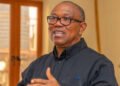
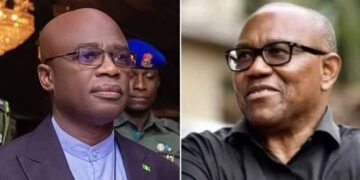
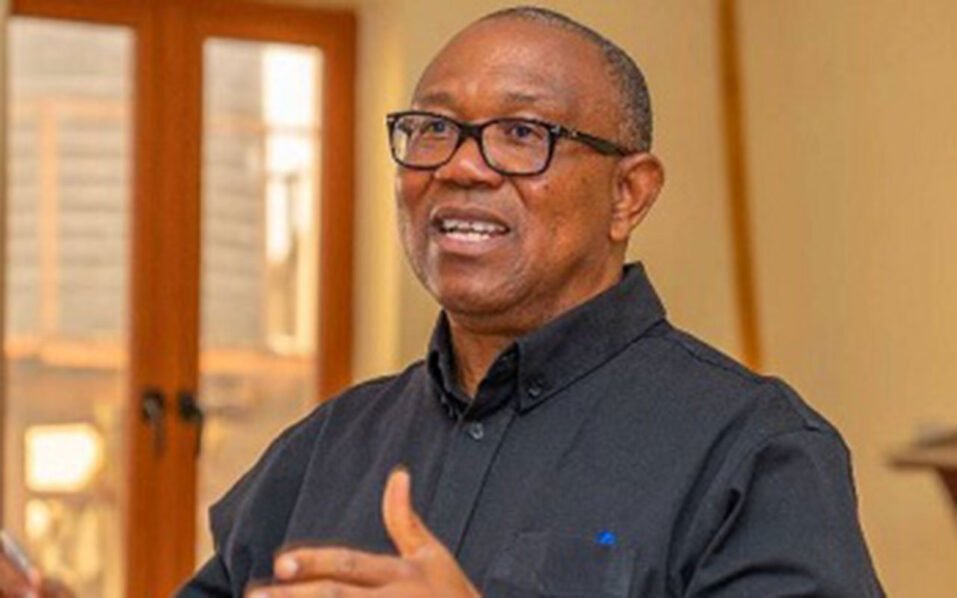
Peter Obi must be living in a different world outside Nigeria. He acts as though he is abreast of happenings in the country, but he is not. I say this because his appreciation of the strides made under President Bola Tinubu in the areas of infrastructure, security, welfare and the economy is an indication that he may live in Nigeria, but has refused to see the remarkable things going on.
Yet, he acts like a super know-it-all and the Messiah needed by Nigerians. What would become of a Messiah who speaks without understanding the peculiarities an environment throws up and believes he has a magic wand to turn around the country’s social and economic fortunes in 48 months? He would fail.
I first came to that realisation just few years ago when the monotonous pretender disclosed his intention to contest for the country’s highest political office. That was shortly after he began to garner support from some people who clamoured for a Messiah.
Other than the saviour mentality and the annoying individuals that are propelling him to contest for a role for which he is unsuitable, there is nothing special about him. Other than the fact that he once governed Anambra under disputable records, nothing distinguishes him from the rabble-rousing Omoyele Sowore or the inexperienced Adewole Adebayo. But more importantly, nothing justifies Obi winning the country’s highest office.
That was why, when he initially disclosed that he would contest for that very powerful office, I said, even to my Igbo friends: Anambra is not Nigeria and Obi can not defeat Tinubu in an election. His recent interview with Arise TV, where his inflated ego was visually portrayed, deepened my belief that I was not wrong to feel so.
In that about one hour interview, the presidential candidate of the Nigeria Democratic Congress, NDC, laid bare what I consider his shortcomings, convincingly reiterating to critical minds like me that he is not a Messiah and is also unfit to lead Nigeria.
It was Nelson Mandela, that great avatar of freedom and justice in Africa and around the world, who said: “When a leader starts thinking of himself as a hero or a messiah, then he becomes a problem to his people. He might even become a disaster.” Mandela knew that true leadership requires a refined sense of humility and a distilled knowledge of what it means to live to fight another day. And Obi lacks all and many more.
One of the most disgusting parts of the interview that caught my attention was when he said: “Today, we have a president who said he does not believe in Nigeria. I believe in Nigeria. I am committed to it, and I want that unity.
“Nigeria is heading in the wrong direction today. I just need to reverse it and head it in the right direction. In Anambra State, in four years, people saw the difference. Four years. The second term was just in four years they saw the difference. Because in four years, Anambra, which used to exemplify bad things, became an example of what is good.” Let ask the state’s current Governor, Professor Charles soludo, he has a different story.
Does Obi know that one of the greatest leaders to ever emerge from this country describe Nigeria as a mere geographical expression? Did that statement stop him from contributing to the development of the country as a nation-state?
That Tinubu said, in a 1997 interview, that he did not believe in “One Nigeria” does not, by itself, mean that he does not believe in the development of Nigeria. In fact, the fuller context of that interview was an argument for a true federation in which the various nationalities could develop at their own pace and contribute to the progress of the country.
Also asked what he would do on security, he said: “In the first week, it’s for me to appoint competent heads in all security agencies. With decisive instruction that we must deal with this. I will commence immediate consultation with stakeholders in different areas of Nigeria on how to deal with it. And it will be, that is the beginning. Even if you are retaining the ones that are there, they will know that a new commander-in-chief is involved.”
This is another reason I said he speaks like he lives in a different universe distinct from Nigeria. Does he not know that, on October 24, 2025, President Bola Tinubu appointed new Service Chiefs? The Presidency said the changes were part of efforts to strengthen the national security architecture.
When it comes to funding, he has set the highest annual allocations on security and defence in recent history than any other Nigerian president. In 2025 alone, his administration allocated about N6.85 trillion to the security and defence sector, more than ex-presidents Jonathan and Buhari ever did.
This move has helped reduce the level of insecurity in the country, particularly in the North, which became ungovernable under the leadership of the People’s Democratic Party, PDP, where Obi used to seek political refuge.
Another point that he made during the interview was free and fair elections. Speaking on the programme, he said: “What we are saying is that we are prepared to ensure that our votes count.
“They must count. We must make sure that at every polling unit, the votes are counted, the votes are recorded properly, the votes are transmitted properly, and we will even have a dual transmission so that as it’s going to the proper designated INEC portal, it’s also being transmitted where the people can see it.”
This is another area where I find Obi’s argument difficult to understand. It is one thing to demand transparent elections; it is another to suggest that the administration has no interest in allowing Nigerians to determine the outcome of elections.
A case in point was the recently concluded Osun governorship election, in which incumbent Governor Ademola Adeleke, the Accord Party candidate, was declared winner by the Independent National Electoral Commission, INEC. Adeleke polled 511,067 votes to defeat the APC candidate, Bola Oyebamiji, who scored 444,815 votes.
That was an example of Nigerians participating in the electoral process.
As I close with this, I would like to bring out a point that Obi made which reminds me of a popular culture in Igboland. It is something called boy-boy. Having been a running mate to Atiku in the past, Obi showed his boy-boy mentality by describing Atiku Abubakar, the presidential candidate of the African Democratic Congress, ADC, as his leader.
Do Nigerians want Atiku’s boy-boy or a proxy as their president? That answer would be given by Nigerians at the ballot box.
Oyatomi Esq., is a former Editor, Sunday Vanguard 1999 to 2010, Author, FINGERPRINT: Nigeria’s Tangled Transition to Nationhood, 2008 and currently a member, Independent Media and Policy Initiative, IMPI, a Think-Tank based in Abuja.