












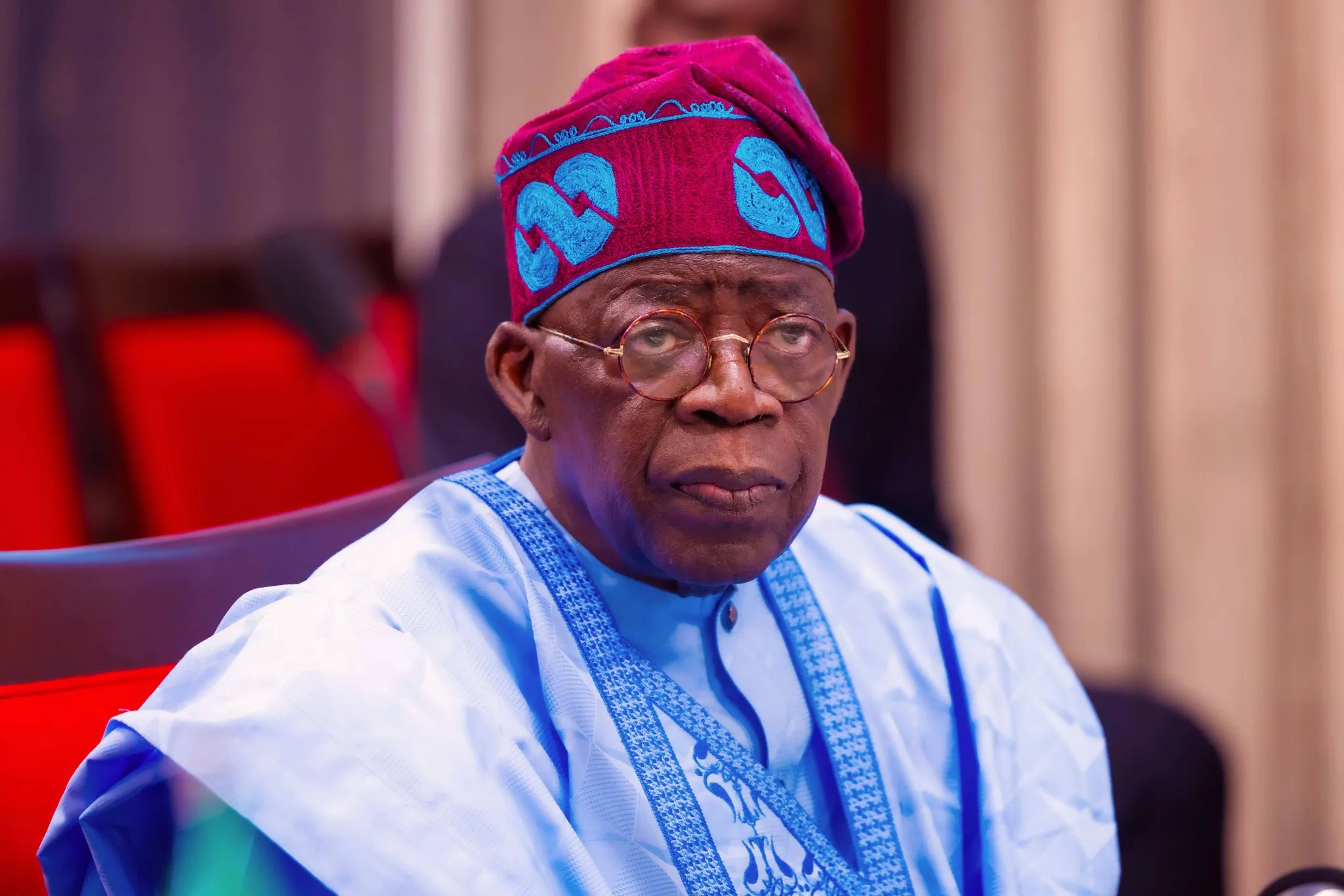
President Bola Tinubu has inaugurated a Presidential Working Group tasked with drafting the National Policing Bill, the legislation that will determine how Nigeria’s newly approved state police system actually functions once it becomes law.
In a statement by the presidential spokeperson Bayo Onanuga, the panel was launched at the Presidential Villa on Tuesday, with Chief of Staff Femi Gbajabiamila representing the president and taking on the role of committee chairman.
Its formation follows the National Assembly’s passage of the Constitution Alteration (State Police) Bill, 2026, which sets up a dual policing structure made up of a Federal Police Service and 36 separate State Police Services.
Tinubu, in remarks delivered at the event, drew a distinction between the constitutional amendment and the bill his new committee will produce. The amendment creates the legal space for state police to exist, he said, but does not spell out how the system will actually run day to day — that task falls to the National Policing Bill.
According to the president, the forthcoming legislation is expected to cover minimum policing standards, a certification process for state readiness, coordination between federal and state forces, accountability mechanisms, human rights protections and the fiscal terms governing the new state forces.
Tinubu said he wants a “technically robust, implementation-ready” draft ready for the National Assembly as soon as the constitutional amendment process wraps up, rather than waiting until then to start drafting. “We must not wait until the constitutional process is concluded before beginning this important assignment,” he said.
Committee Composition
Beyond Gbajabiamila as chairman, the working group includes the Attorney-General of the Federation, the President of the Nigerian Bar Association, the Chairman of the Nigeria Governors’ Forum, the National Security Adviser, the Inspector-General of Police, and the Chairman of the NGF Committee on State Police. A secretariat will provide administrative support.
Governors Pledge Backing, Cite Personnel Numbers
Ogun State Governor Dapo Abiodun, speaking on behalf of the Nigeria Governors’ Forum, said the 36 states plan to move quickly once the bill reaches their respective Houses of Assembly, with the goal of unanimous passage.
Abiodun framed the reform as an answer to long-running public demand for more localised policing, saying it addressed “the cries of Nigerians about cascading policing and removing it from the Exclusive Legislative List.” He pointed to regional outfits such as the South-West’s Amotekun as evidence the model can work.
On numbers, Abiodun projected a significant expansion of the country’s security workforce: if each state fields roughly 6,000 personnel, he said, the country would gain close to 200,000 additional officers alongside the existing federal police. He also praised Tinubu for setting up the implementation panel before the constitutional process was even finished, calling it evidence of executive “proactiveness.”
Justice Minister, Bar Association Weigh In
Attorney-General and Minister of Justice Lateef Fagbemi, SAN, described the timing as apt given the country’s security situation. “There is no denying the fact that we are in a critical moment security-wise, and all hands must be on deck,” he said, appealing to state governors to ratify the constitutional amendment without delay, calling it “a shared responsibility.”
Nigerian Bar Association President Afam Osigwe backed the state police initiative but flagged the need for strong legal guardrails. “Nigeria can hardly be effectively policed by one national police,” he said, while cautioning: “We must ensure we do not create a monster. The right legal framework must guarantee accountability and prevent oppression.” He committed the NBA to working with the committee on legislation that balances security gains with rights protections.
Justice ministry officials from Plateau, Lagos and Ondo states, along with representatives of the Inspector-General of Police and the National Security Adviser, also attended.
What Happens Next
The constitutional amendment still requires ratification by at least 24 of Nigeria’s 36 state assemblies before it takes full effect — a process governors have pledged to expedite. Meanwhile, the Presidential Working Group is expected to proceed with drafting the National Policing Bill in parallel, with the stated aim of having a ready text for the National Assembly once the amendment clears its remaining hurdles. How quickly individual states can meet the “readiness certification” standards Tinubu referenced is likely to shape how fast the new system actually goes live.